Zhinan Temple: The 1,185-Step Taoist Landmark Above The Maokong Cable Car
Zhinan Temple has watched over the Wenshan hills since around 1890, drew three million visitors a year at its 1970s peak, and now sits one gondola station from the tea houses of Maokong. This guide covers the steps, the deity, the legend, and the state of the complex after the August 2026 fire.
Short answer
Zhinan Temple is a Taoist temple complex founded around 1890 on Monkey Mountain in Taipei's Wenshan District, dedicated to the immortal Lü Dongbin. The classic approach climbs 1,185 stone steps in 23 flights. Entry is reported as free, and the temple is open daily. The August 2026 fire damaged Lingxiao Hall, but the rest of the complex remains open.
Zhinan Temple is the reason a cable car was first proposed for this hillside in 1932, decades before the Maokong Gondola finally opened in 2007. The temple's own history claims visitors were already arriving in the hundreds of thousands per year by 1938, and by 1973 it recorded more than 3 million annual visitors, making it Taiwan's second-most-visited scenic area that year. The gondola that now delivers tourists to its doorstep is, in a sense, the fulfillment of a plan the temple itself inspired.
This guide walks through everything a visitor needs: how to reach the temple, what the famous stone staircase involves, who Lü Dongbin is, why local couples argue about visiting, and, importantly, what changed after the fire that damaged Lingxiao Hall on the evening of 24 August 2026. The rest of the complex stayed open, and the temple has already announced a restoration plan.
What Is Zhinan Temple And Why Does It Matter?
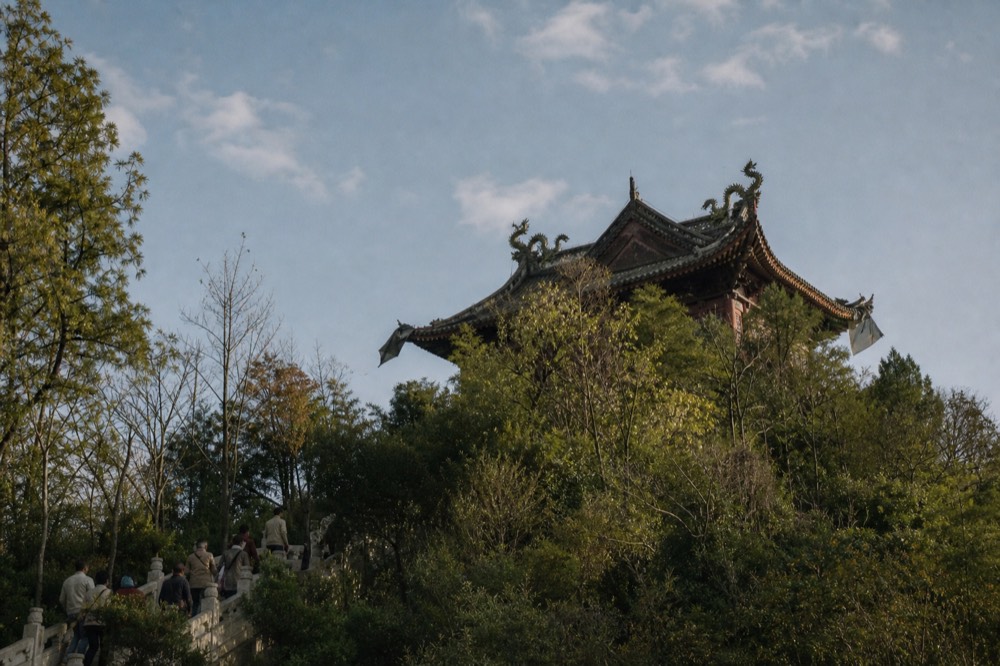
Zhinan Temple, also called Xiangong Temple, is a multi-hall religious complex founded around 1890 on Houshan, the hill also known as Monkey Mountain, in Taipei's Wenshan District. Its principal deity is Lü Dongbin, one of the Eight Immortals of Taoist tradition, and the complex unusually blends Taoist, Buddhist and Confucian practice under one roof. It is regarded as one of Taiwan's significant Taoist holy sites.
The founding story traces back to 1882, when incense representing Lü Dongbin was carried from Shanxi's Yongle Palace to Taiwan by Tamsui County Magistrate Wang Binlin. Local gentry then built a thatched shrine on the hillside around 1890, and the complex grew from there. Historian Paul Katz and the Taipei Times date the temple proper to 1891, so the honest phrasing is "founded around 1890 to 1891" rather than a single year.
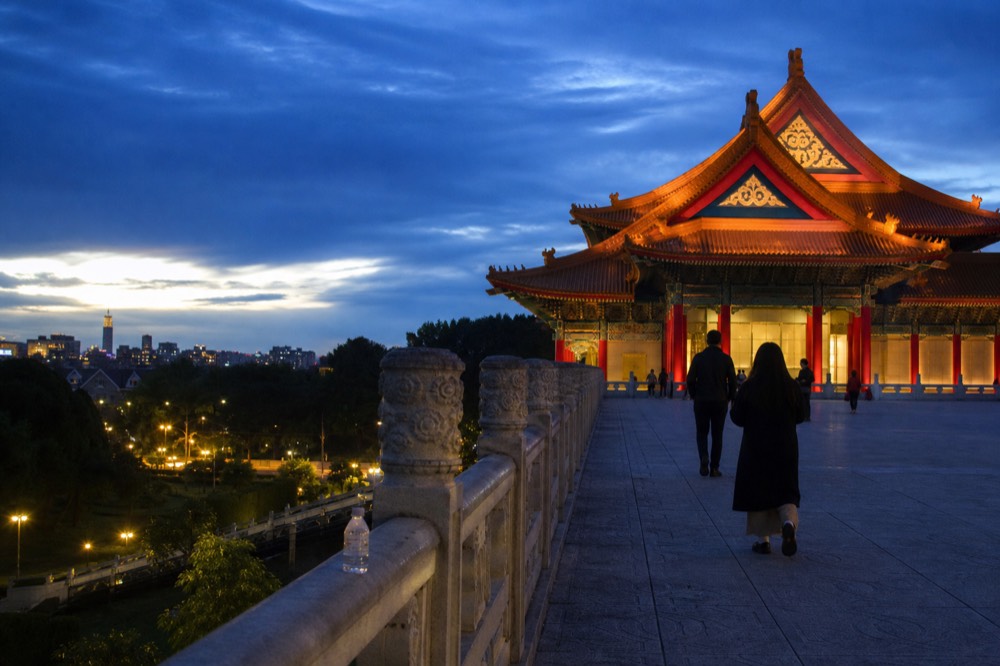
The oldest surviving main hall, Chunyang Hall, was constructed in 1890 and remains the complex's principal Taoist hall dedicated to Lü Dongbin. Around it grew a sprawling set of buildings: Lingxiao Hall, a six-storey reinforced-concrete structure dedicated primarily to the Jade Emperor, built between 1963 and 1966; Daxiong Hall, a Buddhist hall from around 1973; and Dacheng Hall, a Confucian hall. The temple grounds span dozens of hectares, with one source citing nearly 80.
How Do You Get To Zhinan Temple?
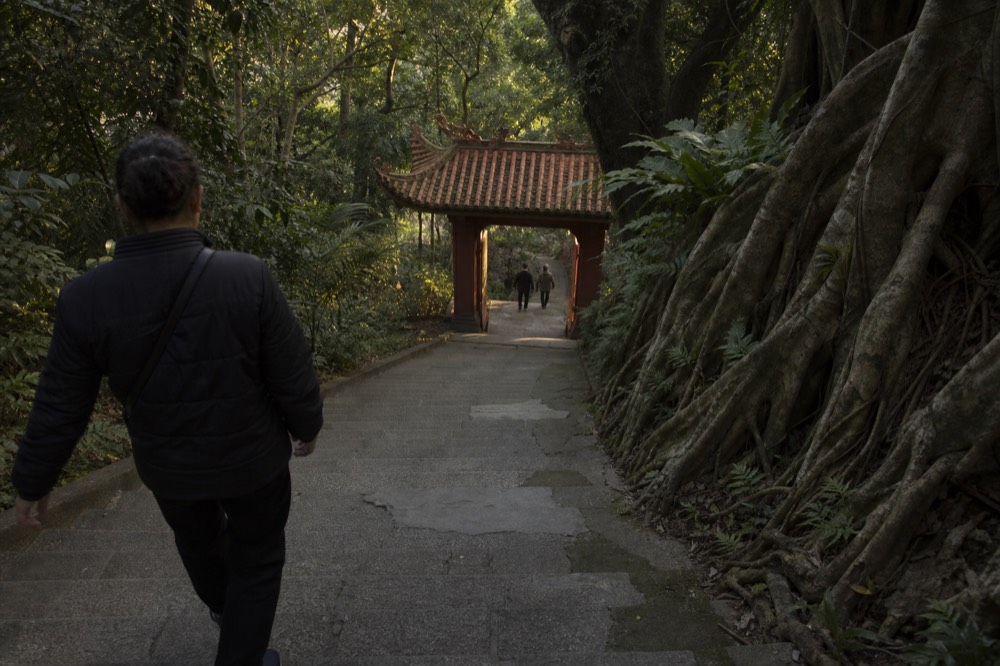
The easiest modern route is the Maokong Gondola: Zhinan Temple Station is the third of the four passenger stations, and a short paved path connects the station to the temple complex. By MRT, take the Wenhu Line to Taipei Zoo Station, then either walk to the gondola or ride a bus up the hill. The classic approach on foot climbs the historic stone stairway from Lane 33, Section 3, Zhinan Road.
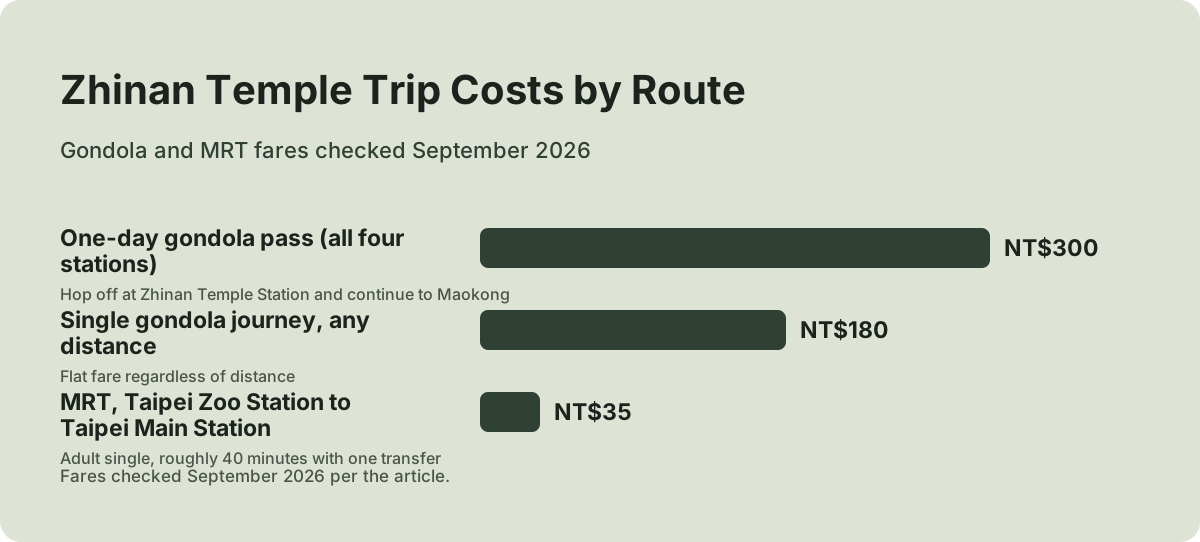
The gondola option deserves emphasis because it barely existed in older guidebooks. A one-day pass covers all four passenger stations, so you can hop off at Zhinan Temple Station, visit the temple, and continue on to Maokong for tea afterward, all on the same ticket. The pass costs NT$300 at the gate, and a single journey costs NT$180 flat regardless of distance. Children aged 0 to 5 ride free with a ticketed adult, up to two per adult.
Gondola ticket holders can also ride the Maokong Tour Bus Right and Left Lines for free on the same day, which is handy if you want to descend by bus instead. If you are coming from central Taipei, the MRT fare from Taipei Zoo Station to Taipei Main Station is NT$35 adult single, and the journey takes roughly 40 minutes with one transfer. More detail on routes, buses and parking is in the getting to the gondola from Taipei guide.
| Route | How it works | Notes |
|---|---|---|
| Maokong Gondola | Zhinan Temple Station, third of four passenger stations | Short paved path to the complex |
| MRT Wenhu Line | To Taipei Zoo Station (BR01), then gondola or bus | NT$35 adult single from Taipei Main |
| Maokong Tour Bus | Right and Left Lines | Free for same-day gondola ticket holders |
| Historic stone steps | From Lane 33, Sec. 3, Zhinan Road | 1,185 steps in 23 flights, rebuilt 1936 |
| Buses BR15, S10 | Up to Maokong from the zoo area | The routes TRTC recommends during gondola closures |
One caution: the gondola suspends service for routine maintenance on most Mondays, and the exact Mondays vary month to month, so check the operator's published calendar before planning a Monday visit. The weather and suspensions guide explains the full rules, including the free shuttle buses that take stranded passengers down the mountain if service halts mid-visit.
How Many Steps Lead Up To Zhinan Temple?
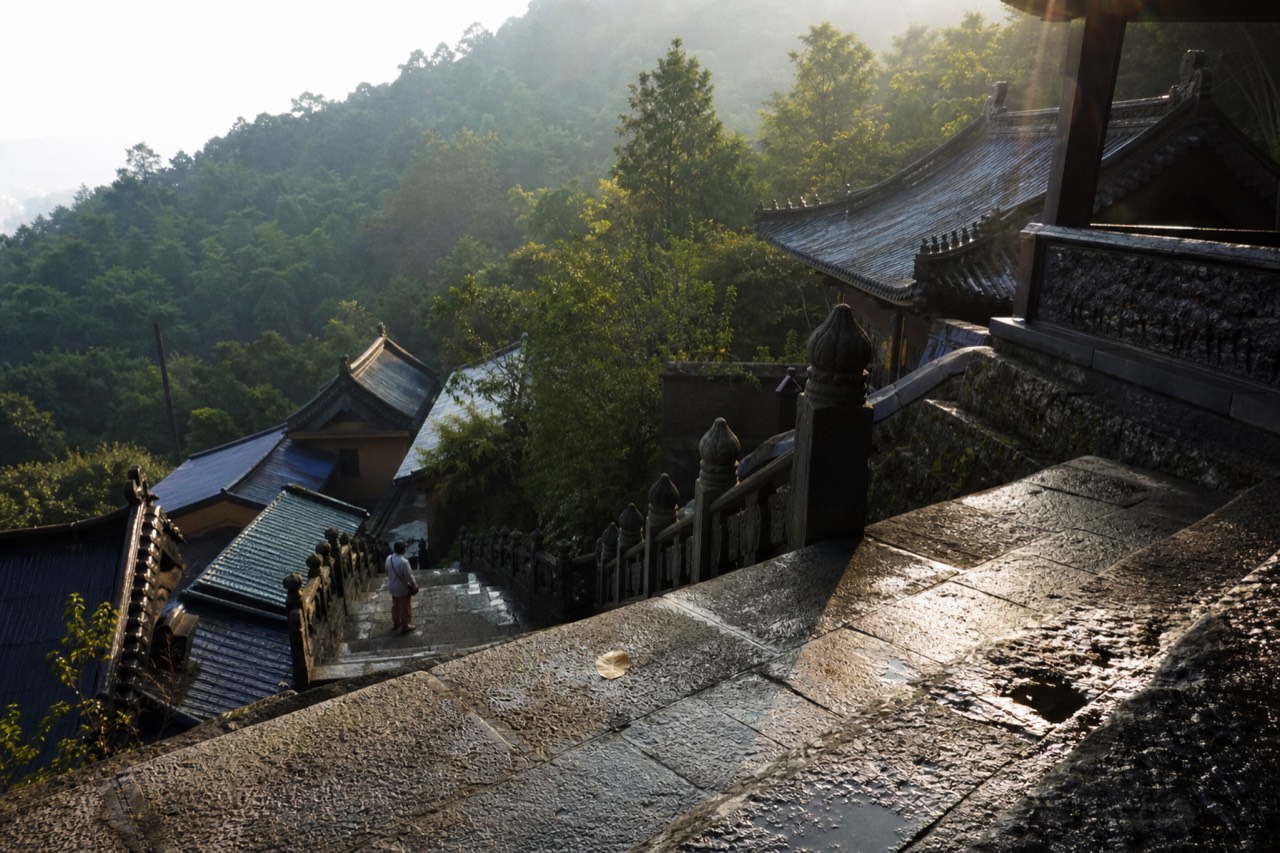
The historic stairway from the trailhead at Lane 33, Section 3, Zhinan Road climbs 1,185 stone steps arranged in 23 flights over a path of more than 900 metres. The steps were rebuilt in 1936 with Japanese-era stone lanterns and benches added along the way, and a stone archway from that era still stands at the trailhead. Climbers should expect roughly 30 to 40 minutes for the ascent.
The precise figure comes from the gondola operator's own English attractions page, which is the most detailed source anywhere. Chinese-language pages round it to "about 1,200 steps," and press coverage follows suit, but 1,185 is the number to trust. The 30-to-40-minute climb time is not an official figure: it traces to a 1926 account by the painter Kinichiro Ishikawa, and modern descriptions repeat it, so treat it as indicative rather than measured.
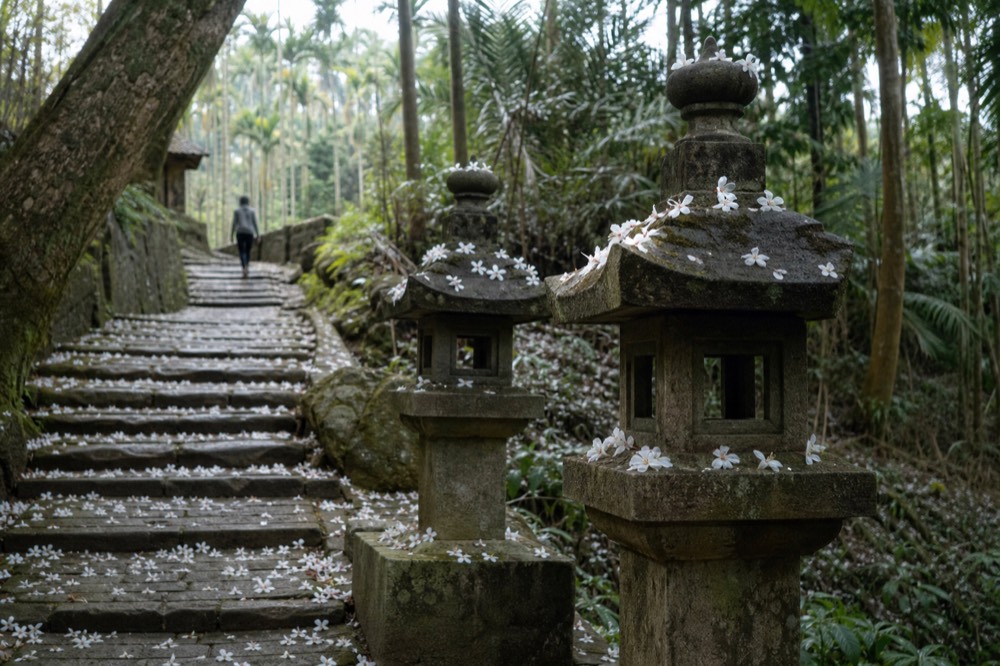
The staircase was not always stone. A "thousand stone steps" already existed by 1926, and the 1936 rebuild gave it the form visitors see today. Paired stone lanterns on the landings carry donors' names and dates, a small piece of social history embedded in the climb. Palm and pine trees were planted for shade at the same time. The trail continues past the temple itself: the full set here is the Zhinan Temple Trail plus the Dacheng Hall Trail, and tung blossom falls along the upper section in April and May.
If 1,185 steps sounds like too much, it is worth saying plainly: the gondola makes the staircase optional. Zhinan Temple Station sits a short walk from the complex on a paved path, so visitors with strollers, mobility limits, or simply tired legs can skip the stairway entirely and still see the temple. The stairway is now a chosen experience rather than a requirement, which is a large part of why the temple's visitor numbers recovered after the gondola opened in 2007.
Who Is Lü Dongbin, And Why Do Couples Argue About This Temple?
Lü Dongbin is one of the Eight Immortals, a Taoist figure also venerated here under the names Xiangong and Luzu, and he is the principal deity of Zhinan Temple. A persistent local legend claims couples who visit together will break up, supposedly because the immortal resents romance. The temple's own cultural centre disputes this, pointing to Japanese-era songs in which couples prayed at Zhinan Temple for lasting love.
The temple's argument is worth quoting in spirit: Lü Dongbin, having attained immortality, would not begrudge anyone their happiness. Japanese-era records actually frame the temple as a couples' destination, with songs using the phrase "yong yu ai he," roughly "forever bathing in the river of love." The break-up legend appears to be a later back-formation, and the temple itself treats it as a myth. Handle the story the way the temple does: as folklore worth mentioning, not fact worth fearing.
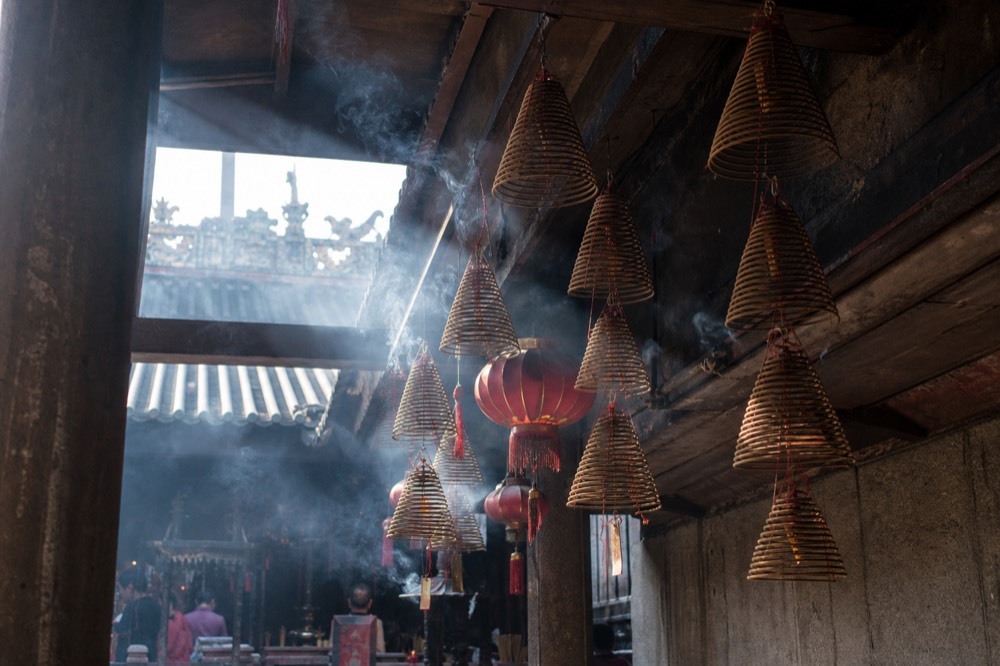
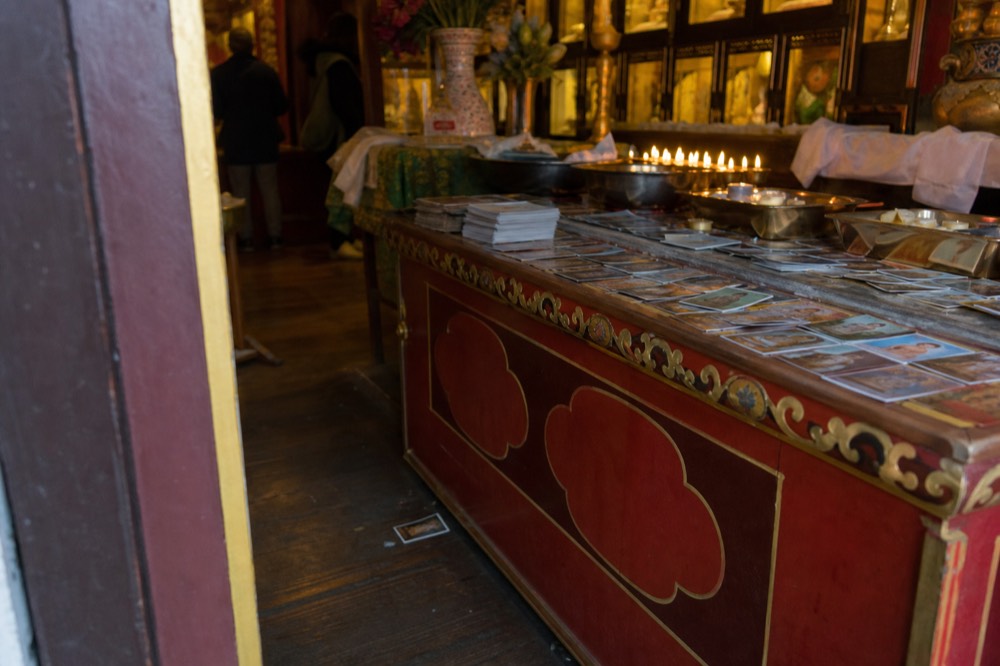
The temple also offers something unusual for a Taoist site: a Dream Interpretation Room, where believers stay overnight seeking answers to their problems in dreams. This practice, combined with the temple's reputation among students praying for academic success, gives the complex a distinctly lived-in religious character rather than a purely touristy one. Visitors should be respectful of people mid-prayer, especially in Chunyang Hall, the oldest hall, which dates to 1890.
What Happened In The August 2026 Fire At Lingxiao Hall?
On the evening of Monday 24 August 2026, a fire severely damaged Lingxiao Hall, the six-storey hall dedicated primarily to the Jade Emperor. About 1,500 square metres were affected: the first floor was destroyed and roughly a third of the second floor was damaged. No injuries occurred. The temple's chair has said restoration will take at least three years and cost more than NT$100 million.
The fire was reported at 20:47 and extinguished just after midnight, more than three hours later, with 43 fire vehicles and 110 firefighters and police attending along with 18 volunteer firefighters. The Sanqing Hall and Tai Sui Hall areas were worst hit, with statues including the Three Pure Ones and the Queen Mother of the West damaged. The hall's wooden structure, combined with incense and joss paper, is cited as having accelerated the blaze. The cause was under investigation in reporting that followed.
Two facts put the damage in perspective. First, Lingxiao Hall was completed in 1966, so while the loss is real, the complex's oldest hall, Chunyang Hall from 1890, was untouched. Second, the rest of the temple complex remained open after the fire, with some rituals relocated to other halls such as Doumu Hall. A visitor arriving today will see scaffolding and closed sections around Lingxiao Hall, but the temple as a whole is functioning. The temple has begun fundraising and says it will incorporate fire-resistant materials in the rebuild.
| Hall | Dedicated to | Built | Status after August 2026 |
|---|---|---|---|
| Chunyang Hall | Lü Dongbin (main Taoist hall) | 1890 | Open, undamaged |
| Lingxiao Hall | Jade Emperor and Taoist deities | 1963–1966 | Severely damaged, restoration planned |
| Daxiong Hall | Buddhist hall | Around 1973 | Open |
| Dacheng Hall | Confucian hall | Twentieth century | Open |
| Dream Interpretation Room | Believers seeking dream answers | Historic | Open, rituals partly relocated |
There is a curious footnote to Lingxiao Hall's history: the building appeared in the 1969 Hollywood thriller "The Chairman," starring Gregory Peck, where it stood in for Mao Zedong's Beijing residence. The hall that burned in 2026 was, among other things, a piece of film history. Taipei City officials expressed concern after the fire and offered assistance, though the temple complex is not designated as a historic site by the city government.
What Can You See And Do At The Temple Complex Today?
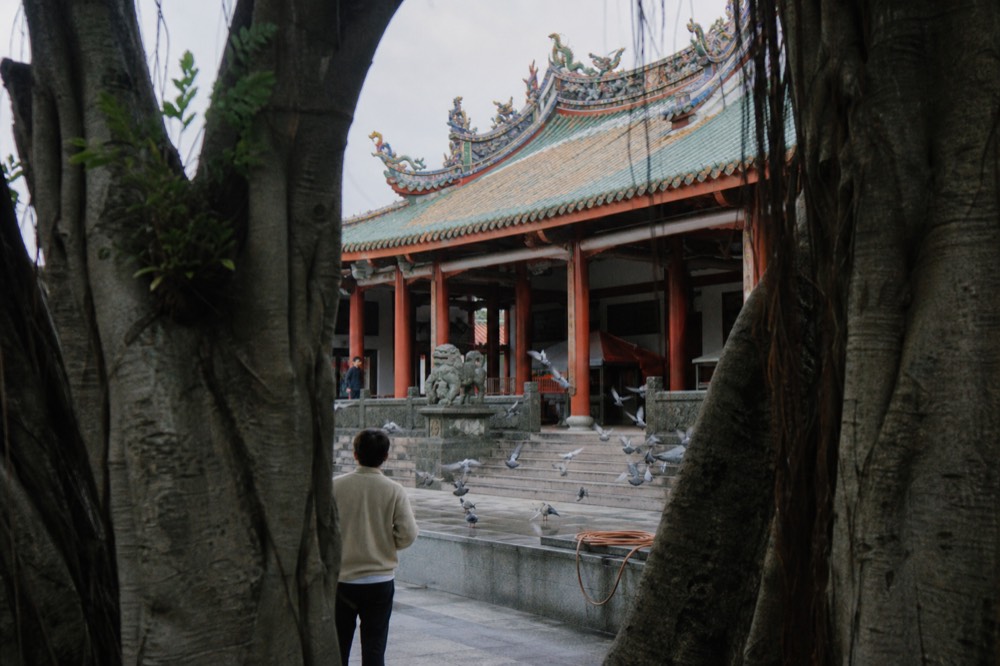
Visitors today can explore the open halls, the Dream Interpretation Room, the Chen Yang-Chun Art Gallery opened by the temple, and a trail to Monkey Mountain from the car park behind the complex. Reported hours are 06:00 to 20:00 daily with free admission. The temple is themed by Taipei City as the Zhinan Scenic Area, built around the idea of "three religions, five halls, a guide to life."
The "three religions" framing is genuine and unusual: Taoist, Buddhist and Confucian halls share one hillside, which makes Zhinan Temple a one-stop introduction to all three traditions. The art gallery displays the watercolours of Chen Yang-Chun and is an easy, air-conditioned stop between halls. For walkers, the Monkey Mountain trail runs from the car park behind the temple to No. 71 Wanshou Road, and Monkey Mountain's main peak carries a trig point at 551 metres, with a Class 4 trig point at 553 metres recorded on the operator's own pages.
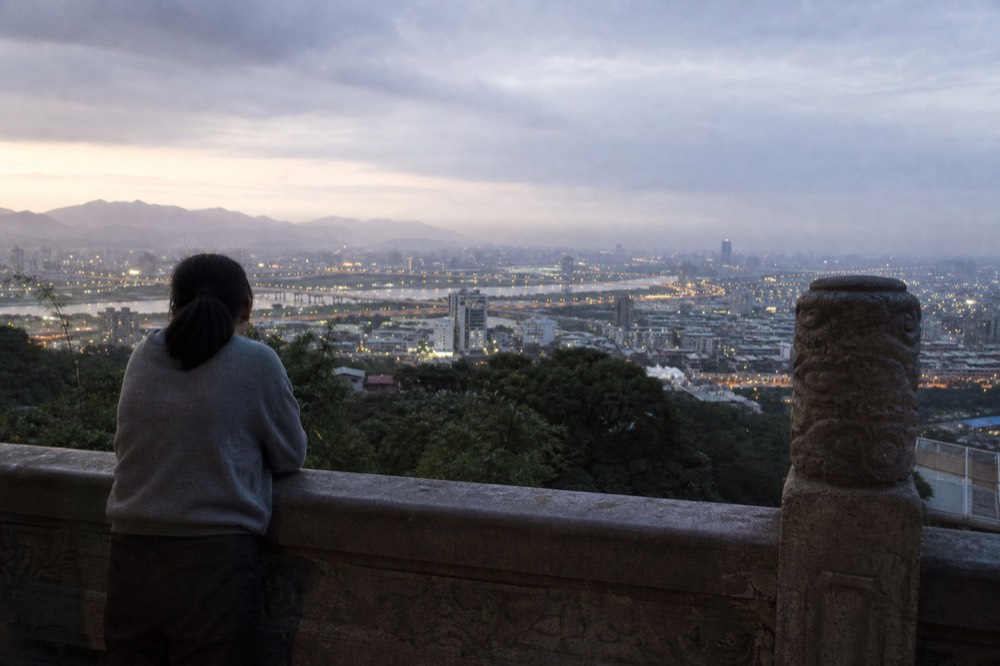
The temple also makes a natural pairing with the rest of the hillside. Zhinan Temple Station is one stop before Maokong Station, so a common itinerary rides up, walks the temple, then continues to the tea houses and trails at the top. The Maokong hiking trails guide covers the routes from the upper station, including the Camphor Tree Trail, which is about 1.5 kilometres and roughly 30 minutes one way, and the 70-metre Denggao Trail, the shortest signposted trail in the area.
The one-day gondola pass is the ticket that makes this pairing work, since it allows unlimited rides across all four stations on the day it is activated. It is not a round trip and not a combo: it is genuinely hop on, hop off. The pass is open-dated and valid for 180 days, with instant confirmation when booked online.
When Is The Best Time To Visit Zhinan Temple?
Early morning on a weekday is the calmest time to visit, both for the temple itself and for the gondola queues below. The temple is reported open 06:00 to 20:00 daily, so sunrise arrivals are possible for photographers. Avoid maintenance Mondays, when the gondola is usually shut, and note that typhoon season in Taipei runs from May through November, peaking in August and September.
Weekday mornings give you two advantages at once: shorter queues at the gondola's Taipei Zoo Station and a temple courtyard that belongs mostly to local worshippers. The stone staircase in particular is a different experience before the crowds arrive, with the 1936 stone lanterns and the forest shade at their best in soft light. If you are visiting in April or May, the tung blossom on the upper trail sections adds a seasonal reason to climb.
Typhoon timing deserves a specific note because it cuts against intuition. Taipei's typhoon season runs 1 May to 30 November, with activity peaking in August and September, and the gondola suspends service the moment a land warning covering Taipei is issued. But post-typhoon days often provide the clearest visibility and blue skies in the Taipei area, so the day after a storm passes can be the best viewing day of the month, provided the gondola is running again. Visitors wanting the glass-floor upgrade on the ride up should note it costs NT$50 per person per trip on top of any ticket.
| Time | What to expect |
|---|---|
| Early weekday morning | Calm temple, short gondola queues, soft light on the steps |
| Weekend afternoon | Busiest period; visitor reports describe crystal cabin waits over 30 minutes |
| April–May | Tung blossom on the upper trail sections |
| Lunar New Year | Temple at its most crowded; tens of thousands historically visit |
| Post-typhoon days | Often the clearest visibility, once service resumes |
Festival timing matters too. Historically, Lunar New Year brought tens of thousands of visitors, and in 1955 bus companies laid on more than 100 extra services; a 1980 report described four-hour waits for the bus back down. The gondola solved that bottleneck, but it also means festival days are now the busiest days on the cable car itself. If your dates are fixed to a holiday, book the gondola online in advance: the operator's own booking system exists precisely to save queue time, and it is specifically recommended for Crystal Cabins.
What Should You Bring And Know Before You Go?
Bring water, sun protection and comfortable shoes if you plan to climb the 1,185 steps, and small bills if you want to buy incense, prayer cards or vegetarian snacks from the temple. Reported admission is free, so there is no ticket to buy for the temple itself. If you are arriving by gondola, an EasyCard or a pre-booked voucher speeds up the whole day, and the same card unlocks free Maokong Tour Bus rides.
The climb deserves respect even though it is a stairway, not a hike. Thirty to forty minutes of continuous stone steps in Taipei humidity is a genuine workout, and there is no shade line to speak of on the flights themselves, only at the landings where the 1936 benches sit. Start early in summer. The descent is easier on the lungs but harder on the knees, so anyone with joint problems should consider riding the gondola up and walking down, or simply using the station path both ways.
Modesty norms apply as at any active Taiwanese temple: shoulders covered, no hats indoors, and quiet voices near worshippers. Photography is generally accepted in courtyards and exterior terraces, but ask before photographing inside halls, especially where rituals are ongoing. The temple's vegetarian offerings are a genuine reason to linger; it runs vegetarian courses and sells vegetarian cakes and tea snacks, and the nearby Tianen Temple further up the hill does the same.
A final planning point ties back to the gondola. The operator publishes no real-time queue or crowd indicator, no app and no website widget, so there is no way to check conditions before you leave. The mechanism for beating the line is the online booking system, which has existed since December 2011 and lets you enter at an appointed time slot rather than queue. On a busy weekend this is the difference between a 20-minute visit to the temple and a morning spent standing in line.
Zhinan Temple rewards the visitor who treats it as more than a photo stop. It is a working religious complex with a disputed legend, a fire story still being written, a staircase older than most countries' national parks systems, and a cable car connection that makes all of it reachable in half a day from central Taipei. For the wider picture of what this hillside is famous for, see what Maokong is famous for, and for the site's full coverage start with Maokong Gondola itself.
Zhinan Temple is a free-to-enter Taoist complex founded around 1890, reachable by gondola or by a 1,185-step stone stairway rebuilt in 1936. It remains open after the August 2026 fire that damaged Lingxiao Hall, its restoration planned to take at least three years. The questions below cover the step count, access, the couples legend, opening details and the temple's deities.
Common Questions About Zhinan Temple
How Many Steps Does Zhinan Temple Have?
The historic stairway climbs 1,185 stone steps in 23 flights over a path of more than 900 metres, usually rounded to about 1,200 steps. The steps were rebuilt in 1936 with Japanese-era stone lanterns and benches. The climb takes roughly 30 to 40 minutes, though that figure is indicative rather than official.
Is Zhinan Temple Open After The 2026 Fire?
Yes. The fire on 24 August 2026 severely damaged Lingxiao Hall, but the rest of the complex remained open, with some rituals relocated to other halls such as Doumu Hall. Restoration of Lingxiao Hall is planned to take at least three years and cost more than NT$100 million.
Will Couples Break Up If They Visit Zhinan Temple Together?
The temple's own cultural centre says the legend is a myth. Japanese-era songs record couples praying at Zhinan Temple for lasting love, and the temple's position is that Lü Dongbin, having attained immortality, would not begrudge anyone's happiness. Treat the story as folklore, not fact.
How Do I Get To Zhinan Temple?
The easiest route is the Maokong Gondola to Zhinan Temple Station, the third of four passenger stations, followed by a short paved path to the complex. By MRT, take the Wenhu Line to Taipei Zoo Station and connect to the gondola or a bus. The classic approach on foot climbs the stone stairway from Lane 33, Section 3, Zhinan Road.
Is Zhinan Temple Free To Enter?
Entry is reported as free, with daily hours of 06:00 to 20:00. These figures come from secondary listings rather than an official temple page, so confirm locally on arrival. The gondola ride to reach the temple is separate: a single journey costs NT$180 and a one-day pass NT$300.
Who Is Worshipped At Zhinan Temple?
The principal deity is Lü Dongbin, one of the Eight Immortals, also called Xiangong or Luzu. The complex blends Taoist, Buddhist and Confucian practice: Chunyang Hall is the main Taoist hall, Daxiong Hall is Buddhist, and Dacheng Hall is Confucian. The temple also has a Dream Interpretation Room where believers stay overnight seeking answers in dreams.