Maokong Cable Car Tickets And Prices: Every Way To Pay, Compared
The fare scale most guides still quote was abolished on 3 March 2025. Here is the current price of every Maokong Gondola ticket, who qualifies for discounts, and which option actually saves money.
Short answer
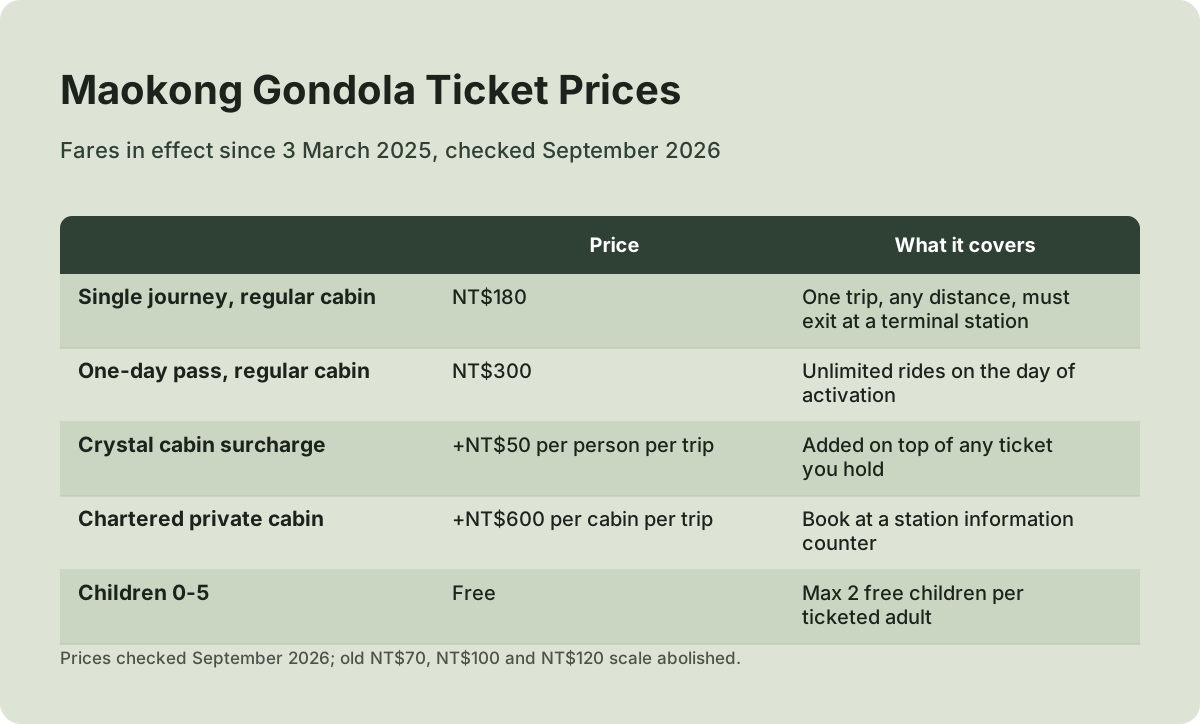
A Maokong Gondola single-journey ticket costs NT$180 flat since 3 March 2025, and the one-day pass costs NT$300 with unlimited rides that day. The crystal cabin is a NT$50 per-trip surcharge on top of any ticket. Children 0-5 ride free, and only Taiwanese nationals qualify for the NT$50 concession fare.
The single most outdated fact in Taipei travel writing is the Maokong Gondola fare. For years the price depended on how many stations you rode: NT$70 for one, NT$100 for two, NT$120 for three. That scale was abolished on 3 March 2025 and replaced with a flat fare, yet a large share of the guides still ranking on Google quote the dead prices as if nothing had changed. Anyone planning from those pages will budget wrong, and anyone who rode before 2025 will be surprised at the gate.
This page prices every current option side by side: the single journey, the one-day pass, the online ticket sold through the operator's listing, the crystal-cabin surcharge, and the concession and group rates. It also covers what happens to your money when a typhoon or lightning storm shuts the line mid-visit, a scenario the fare table does not explain but the operator's rules do. The Maokong Gondola is owned by Taipei City Government and run by the Taipei Rapid Transit Corporation, so every figure below comes from the operator's own published fares and notices.
How Much Does A Maokong Cable Car Ticket Cost Now?
Since 3 March 2025 a single-journey ticket in a regular cabin costs a flat NT$180 per person per trip, no matter how many stations you ride, and a one-day pass with unlimited rides that day costs NT$300. The old station-count scale of NT$70, NT$100 and NT$120 is gone entirely, so any guide quoting those numbers is describing a fare structure that has not existed for over a year.
The change was announced by Taipei City Government with unusually candid reasoning. After seventeen years of operation, the city cited equipment maintenance costs, inflation, electricity prices and minimum-wage rises, and added that the old by-station structure was, in its own words, too complex and too cheap compared with comparable tourist cableways. The new flat fare applies to the whole 4.033 km route, whether you ride one section or all of it.
One practical consequence matters more than any other: the arithmetic that used to make multiple short hops expensive has flipped. Under the old scale, three separate one-station rides cost NT$210. Today, each of those rides is a full NT$180 fare, while a one-day pass covering unlimited rides costs NT$300. The pass became the default choice for almost everyone riding more than once the moment the flat fare landed.
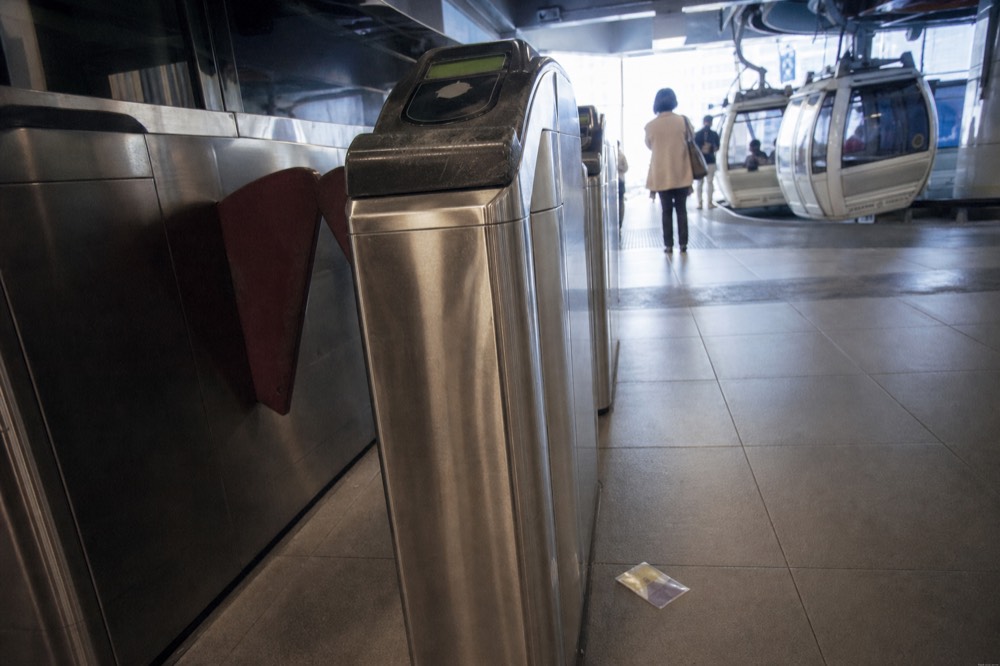
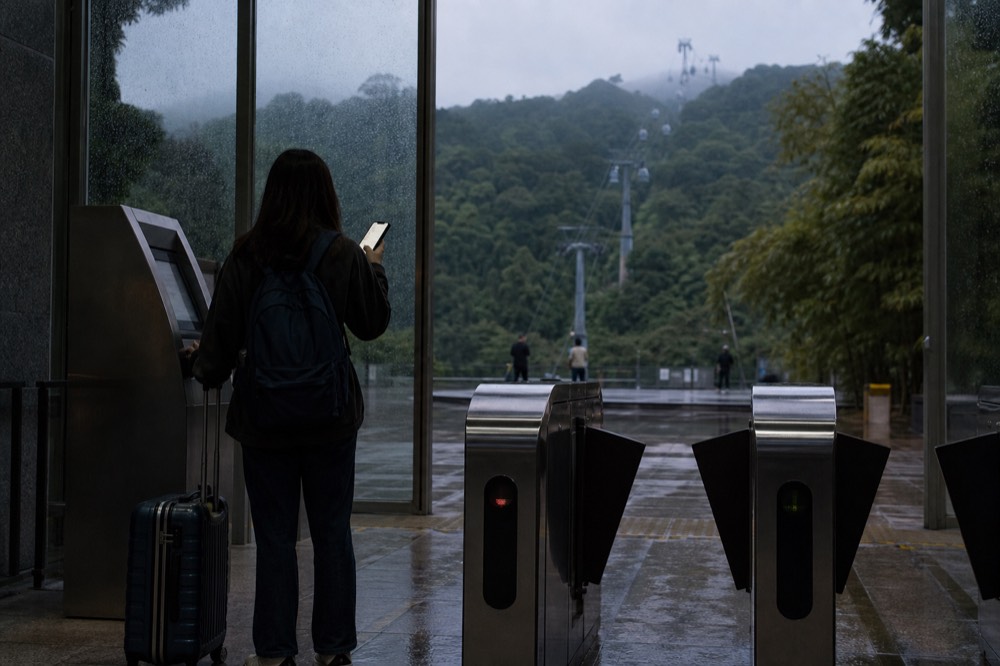
There is no price difference between paying with a stored-value card and buying a paper or QR ticket. EasyCard, iPASS and iCASH are all accepted at the gates, one card per person per ride, and the fare charged is the same NT$180. The cards are a convenience, not a discount, though they are the only route to the concession fare for eligible Taiwanese nationals, who must tap at a dedicated gate.
| Ticket | Price | What it covers |
|---|---|---|
| Single journey, regular cabin | NT$180 | One trip, any distance, must exit at a terminal station |
| One-day pass, regular cabin | NT$300 | Unlimited rides on the day of activation |
| Crystal cabin surcharge | +NT$50 per person per trip | Added on top of any ticket you hold |
| Chartered private cabin | +NT$600 per cabin per trip | Book at a station information counter |
| Children 0-5 | Free | Max 2 free children per ticketed adult |
Single Journey Or One-Day Pass: Which Ticket Should You Buy?
Buy the one-day pass at NT$300 if you will ride the gondola more than once in a day, because two single journeys together already cost more than the pass; buy the NT$180 single journey only if you are riding one way and taking a bus or a hike back down. Anyone planning a round trip or a hop-on, hop-off day is strictly better off with the pass.
The pass is genuinely unlimited. All four passenger stations are covered, so you can ride up to Maokong, walk a trail, ride back down to Zhinan Temple Station, ride up again for sunset, and keep going until closing. The only procedural quirk is at Taipei Zoo Station: pass holders exiting there must hand the ticket to staff and get it stamped for re-entry, a small step that catches visitors out.
The single-journey ticket has one hard rule of its own: you must get off at a terminal station, either Taipei Zoo or Maokong. There is no riding back on the same ticket. If you ride up on a single and change your mind about the hike down, you are buying a second ticket at the top.
For most visitors the practical choice is between buying at the gate and buying the online voucher in advance. The advance voucher is the same one-day pass, priced from about $9.49, rated 4.7 from about 11,700 reviews, with over 400,000 bookings and instant confirmation. It is open-dated and valid for 180 days, which means you can buy it before your trip and activate it on whichever day the weather cooperates, a real advantage in a city where the gondola suspends service in high wind and lightning.
If you are weighing the pass against other Taipei transport and attraction spending, the metro fare from Taipei Zoo Station to Taipei Main Station is NT$35 for an adult single journey, and the trip takes roughly 40 minutes with one transfer. The opening hours and best timing guide covers how late the line runs, which determines how much value you can squeeze from a day pass.
How Much Is The Crystal Cabin Upgrade?
The crystal cabin, the glass-floor "Eyes of Maokong" cabins, is not a separate ticket: it is a surcharge of NT$50 per person per trip added on top of whichever ticket you already hold, whether that is a single journey, a day pass or a concession fare. There is no crystal-cabin day pass, and the surcharge applies each time you board a crystal cabin.
That per-trip detail is where day-pass holders lose money without noticing. A rider who takes the crystal cabin up and the crystal cabin down on a day pass pays the NT$300 pass plus NT$100 in surcharges. The same rider taking a regular cabin both ways pays NT$300 flat. The glass floor is a per-ride luxury, not a per-day upgrade, and the operator's own ticketing treats it exactly that way.
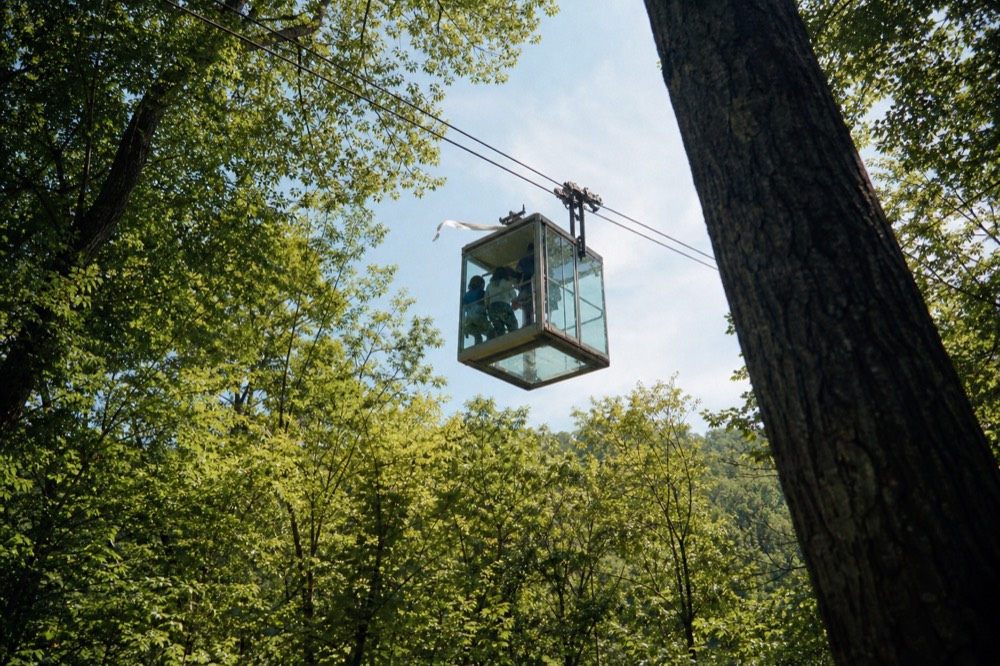
The cabins themselves justify the premium for many riders. Only 31 of the fleet's 147 cabins are crystal cabins, each holding a maximum of 5 passengers rather than the regular 8, because the three-layer reinforced glass floor alone weighs over 200 kg. The floor is roughly 48 mm thick and CE certified, installed under the direction of technicians from SIGMA, the French manufacturer POMA's cabin supplier.
Because crystal cabins are roughly one in five of the fleet and carry fewer passengers, they queue hardest. The operator's answer is its online booking system, live since December 2011, which lets you reserve a crystal cabin time slot instead of standing in the on-site line, which visitor reports describe as exceeding 30 minutes on weekend afternoons. The full crystal cabin guide covers the booking mechanics and the queue arithmetic in detail.
Who Gets A Discount: Concession, Child And Group Rates
Concession fares are NT$50 single journey and NT$100 day pass, but they are restricted to Taiwanese nationals with eligible ID: Taipei citizens, seniors 65 and over, children aged 6 to 12, disabled passengers plus one necessary companion, and retired Taipei City Government civil servants and teachers. Overseas visitors pay the full fare at the gate, and there is no tourist discount of any kind.
This is the single most misunderstood part of the fare structure for international visitors. The NT$50 concession fare appears on fare tables around the web without its eligibility clause, and travelers arrive expecting to pay it. The operator's rule is explicit: supporting documents must be shown before boarding, and the concession EasyCard must be tapped at a dedicated gate. Riders who enter through any other gate get no concession, even if they qualify.
Children are the one genuine free category. Children aged 0 to 5 ride free when accompanied by a ticketed adult, with a maximum of two free children per adult. A third child pays the full NT$180. There is one price for every age above that on the operator's live listing, precisely because the local concession cannot be claimed by overseas visitors.
Groups get real discounts, but only on day passes and only arranged in person. Groups of 20 or more passengers receive 10% off, and groups of 40 or more receive 20% off, with the group travelling together, tickets issued at an information counter, and no refunds once issued. On a large group's day passes, that fifth knocked off is a meaningful saving.
| Rider category | Single journey | One-day pass | Notes |
|---|---|---|---|
| General passenger | NT$180 | NT$300 | Flat fare, any distance |
| Taiwanese concession holder | NT$50 | NT$100 | ID required, dedicated gate only |
| Child 0-5 | Free | Free | Max 2 per ticketed adult |
| Group 20+ | Not discounted | 10% off | Day passes only, at counter |
| Group 40+ | Not discounted | 20% off | Day passes only, at counter |
Taipei senior cards and qualifying care cards add one more wrinkle for residents: they carry 480 points per month, each worth NT$1, usable on the gondola. Points do not roll over, and if the points run short the whole fare falls back to the card's stored-value purse.
Is The New Fare Actually Expensive? The City's Own Benchmark
When Taipei raised the fare in March 2025, it published a per-kilometre comparison against comparable tourist cableways, and Maokong came out the cheapest of the set at roughly NT$45 per kilometre, against Singapore's Mount Faber line at about NT$230, Korea's Songdo Cable Car at about NT$210, Sun Moon Lake Ropeway at about NT$100 and Japan's Hakone Ropeway at about NT$80.
That benchmark table is the city's own justification for the rise, and it is a genuinely useful frame for a visitor deciding whether the ticket is worth it. The Maokong route is 4.033 km long, one of the longer urban gondola routes anywhere, and the flat NT$180 works out cheaper per kilometre than every comparator the city chose. The steepest single increase from the change was on short one-station crystal rides: the old NT$70 one-station fare became NT$230 for a one-station crystal rider, a rise of 228.6 percent.
Ridership history adds context to the price. The system opened on 4 July 2007 and carried its millionth passenger within 81 days. After Typhoon Jangmi caused a landslide near Tower 16 in September 2008, the line shut for roughly 18 months, reopening on 30 March 2010. POMA, the French manufacturer, later wrote to the operator confirming an average availability of 99.90% across 2010 and 2011, which it called the best availability rate recorded to date on any cable car system. Cumulative ridership passed 40 million on 19 May 2026.
What Happens To Your Ticket When The Weather Shuts The Line?
If service is suspended while you hold a one-day pass and you have ridden once, you are refunded the difference between the pass and a single fare; if you have ridden twice or more, there is no refund, and the operator publishes no refund rule at all for unused single-journey tickets. If the line shuts while you are up the mountain, free shuttle buses take stranded passengers back down.
The suspension rules are strict and worth knowing before you buy. Service halts when gusts reach 16 m/s and hold for more than three seconds, or exceed 18 m/s, when lightning strikes anywhere along the route, when shaking reaches intensity 4, or when a typhoon land warning covers Taipei. After a lightning halt, the system resumes if 30 minutes pass with no further strikes, though the operator explicitly refuses to forecast a restart time.
The refund asymmetry is the detail that matters for ticket choice. A day-pass holder who rides up, gets weather-stranded at Maokong, and takes the free shuttle down has ridden once and gets most of the pass price back. A rider who made two trips before the shutdown gets nothing. In typhoon season, which runs from May through November with peak activity in August and September, that argues for activating a day pass early in the day rather than at noon.
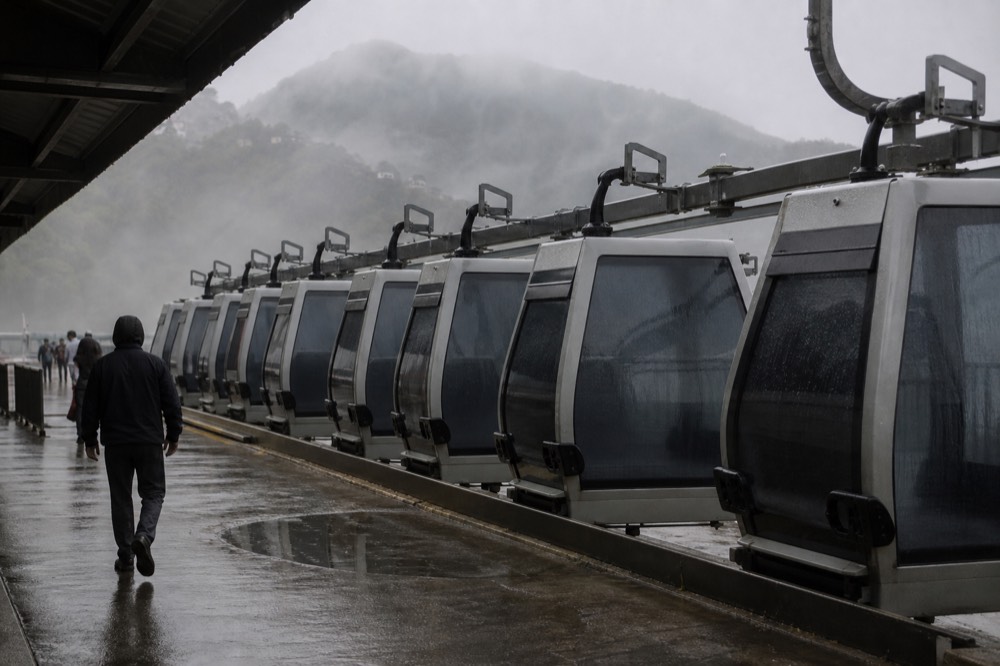
The 2026 record shows these rules are used, not theoretical. Typhoon Bavi closed the line on 10 and 11 July 2026, and a citywide civil-defence air-raid drill shut it from 14:00 on 13 August 2026. The weather and suspensions guide tracks the closure triggers and the published maintenance calendar in full.
Where Should You Buy Your Ticket: Gate, Card Or Online?
Buy at the gate with an EasyCard or a station machine if your plans are fixed, and buy the open-dated online voucher through the operator's live listing if you want to lock in the price before travelling or keep the option of a different day: the voucher is valid 180 days, activates on first use, and carries instant confirmation.
The online option is a one-day pass, not a round trip and not a combo, despite what some listing copy implies. It is the same NT$300-equivalent product sold at the gate, priced from about $9.49, with a rating of 4.7 from about 11,700 reviews and over 400,000 bookings on the live listing. Because it is open-dated, it pairs well with Taipei's weather: you buy it now and ride it whenever the sky cooperates.
Two variants of the online product deserve a mention. The zoo combo, at about $12.69, adds Taipei Zoo entry, which otherwise costs NT$100 at the gate, plus a one-way ride on the zoo's own shuttle train. The pricier bundles add a choice of small Maokong experiences, a sealed-tea DIY session, a Zhinan Temple prayer card, or a sachet of Tieguanyin, plus a discount booklet; there is no tea-house dining voucher in any option. On the bundled options, every item expires 14 days after the first is used.
A word on the crystal cabin and online tickets: the glass floor is in no online option. It remains an on-site NT$50 per-trip upgrade added to whatever ticket you hold, so budget it separately.
How To Plan The Day Around Your Ticket
A one-day pass rewards an early start: the line runs 09:00 to 21:00 on weekdays and 09:00 to 22:00 on weekends and holidays, and the free Maokong Tour Bus transfer, included with any gondola fare on the same day, stops running at 20:00 with only three departures after 19:00. The pass also covers the zoo's South Station, so a zoo morning and a Maokong afternoon fit on one ticket.
The free bus transfer is a fare benefit most visitors never discover. Since 3 March 2025, every gondola rider can ride the Maokong Tour Bus Right and Left lines for free on the same day by tapping the same EasyCard, part of the city's stitching of the zoo, the gondola and Maokong into one "Greater Three-Cat Park". The Right Line loops past the Camphor Tree Trail, Zhangshan Temple and the Apricot Grove every 10 to 15 minutes on weekdays and every 7 to 10 minutes on weekends.
Timing the last rides matters. The operator publishes closing times but no last-boarding cutoff anywhere on its site, so the honest advice is to arrive well before closing rather than to trust a number someone invented. Maintenance Mondays are the other planning trap: the line is closed most Mondays, but the exact Mondays vary month to month and the operator's own English summary rule does not match its published Chinese calendar, so check the dated calendar before you commit a Monday to the trip.
| Planning item | Figure | Notes |
|---|---|---|
| Weekday hours | 09:00-21:00 | Flexes for festivals and weather |
| Weekend and holiday hours | 09:00-22:00 | Same flex clause |
| Free tour bus transfer | Same day as gondola fare | Tap the same EasyCard, both lines |
| Last bus departures from Maokong | 19:00, 19:30, 20:00 | Only three after 19:00 |
| Zoo admission if not bundled | NT$100 | 09:00-17:00, last entry 16:00 |
For a full zoo-plus-gondola itinerary, the Taipei Zoo combo guide works through the sequencing, and once the ticket has carried you to the top, the teahouse terraces of Maokong are where most of the afternoon goes.
A Maokong Gondola ticket now means one of three things: a flat NT$180 single journey, a NT$300 unlimited one-day pass, or an open-dated online voucher equivalent to the day pass, with the NT$50 crystal-cabin surcharge payable on site on top of any of them. The answers below cover the questions visitors ask most about prices, discounts and refunds.
Common Questions About Maokong's Cable Car Tickets
How Much Does A Maokong Gondola Ticket Cost?
A single-journey ticket in a regular cabin costs a flat NT$180 per person per trip, and a one-day pass with unlimited rides costs NT$300. The old NT$70/100/120 by-station scale was abolished on 3 March 2025.
Is The Crystal Cabin A Separate Ticket?
No. The glass-floor crystal cabin is a surcharge of NT$50 per person per trip added on top of whichever ticket you already hold, including a one-day pass or a concession fare. Day-pass holders pay it on every crystal ride.
Can Tourists Get The NT$50 Concession Fare?
No. The NT$50 single and NT$100 day-pass concession fares are restricted to Taiwanese nationals with eligible ID, such as Taipei citizens, seniors 65 and over, children 6 to 12, and disabled passengers with a companion. Overseas visitors pay the full fare.
Do Children Ride Free?
Children aged 0 to 5 ride free when accompanied by a ticketed adult, with a maximum of two free children per adult. A third child pays the full NT$180 fare.
What Happens To My Ticket If The Gondola Suspends Service?
If you hold a one-day pass and have ridden once, you are refunded the difference between the pass and a single fare; after two or more rides there is no refund. Passengers stranded at the upper stations are taken down the mountain by free shuttle buses.
Is The Online Ticket The Same As The One-Day Pass?
Yes. The advance voucher is the one-day pass, open-dated and valid 180 days, priced from about $9.49 with a rating of 4.7 from about 11,700 reviews. It is not a round trip and not a combo.