What Is Maokong Famous For?
Maokong is famous for Tieguanyin tea, hillside tea houses, the night view over Taipei, and the gondola that climbs to it. Here is what each one actually is.
What Is Maokong Famous For?
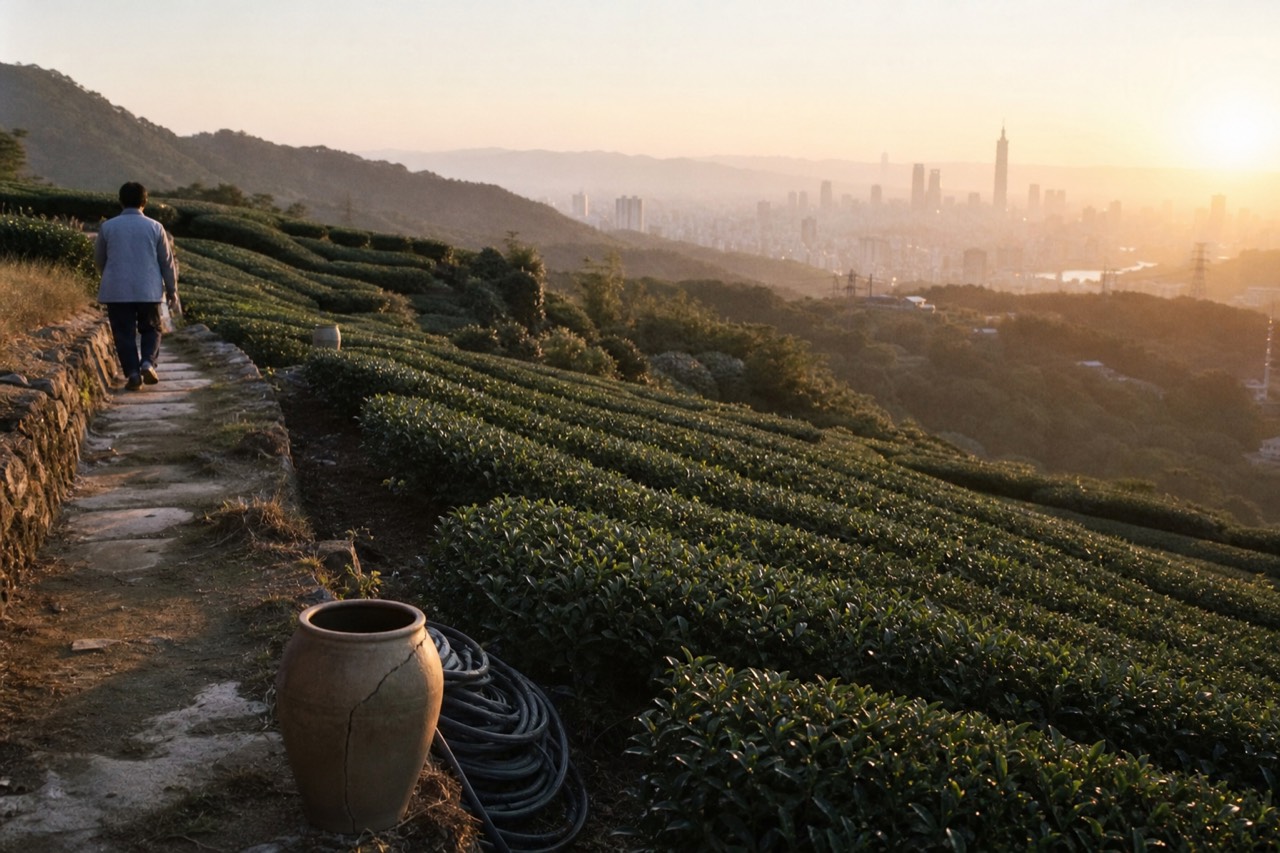
Maokong is famous for four things that all trace back to one hillside in Taipei's Wenshan District: Muzha Tieguanyin tea, the tea houses that serve it with a view over the Taipei basin, the night panorama that keeps the gondola running until 22:00 on weekends, and the Maokong Gondola itself, which has carried over 40 million passengers since 2007. Few visitors arrive knowing that the tea, the name, and even the reason a French-built cable car exists here are one connected story. The tea came first, in 1895, carried up the hill by one man. Everything else followed.
The tea is the root of it. Muzha, the district Maokong sits in, is the only place in Taiwan where Tieguanyin is cultivated, a claim the operator states plainly on its own site. Tea master Chang Nai-miao brought twelve Tieguanyin seedlings from Fujian in 1895 and planted them in the Zhanghu area of Muzha. He was then hired as the Taipei Prefecture travelling tea master for ten years, teaching Baozhong and oolong technique across the region, which is why the wider area's tea is called Wenshan Baozhong. In 1926 he made a third trip to Wuyi and Anxi, and a thousand more seedlings followed. That single chain of events explains why this particular hill grows this particular tea, and why people have been climbing it to drink it for over a century.
The gondola, in turn, exists because the tea houses worked too well. Maokong's roads are narrow farm tracks with severely insufficient parking, and holiday crowds caused serious congestion around the main sights; the Taipei City Government built the cable car expressly to relieve that. So when people ask what Maokong is famous for, the honest answer is a loop: the tea made the destination, the destination outgrew its roads, and the cable car has carried more than 40 million riders up to drink it since 2007. If you want to see how the pieces fit before reading further, the site's Maokong Gondola guide to the whole area covers the geography.
Why Is Tieguanyin The Tea Of Maokong?
Tieguanyin is Maokong's tea because one farmer, Chang Nai-miao, carried twelve seedlings of it from Fujian in 1895, planted them in Muzha's Zhanghu area, and spent the next decades teaching the whole region to make tea. Muzha remains the only place in Taiwan where Tieguanyin is cultivated, alongside the region's other classic, Wenshan Baozhong. The two teas define the hillside. Tieguanyin is a darker, roasted oolong with a mineral depth; Baozhong is lighter, floral, closer to green tea in character. Both grow on plantations at roughly 300 to 500 metres, on hillsides whose climate and soil match those of Anxi in Fujian, the variety's original home.
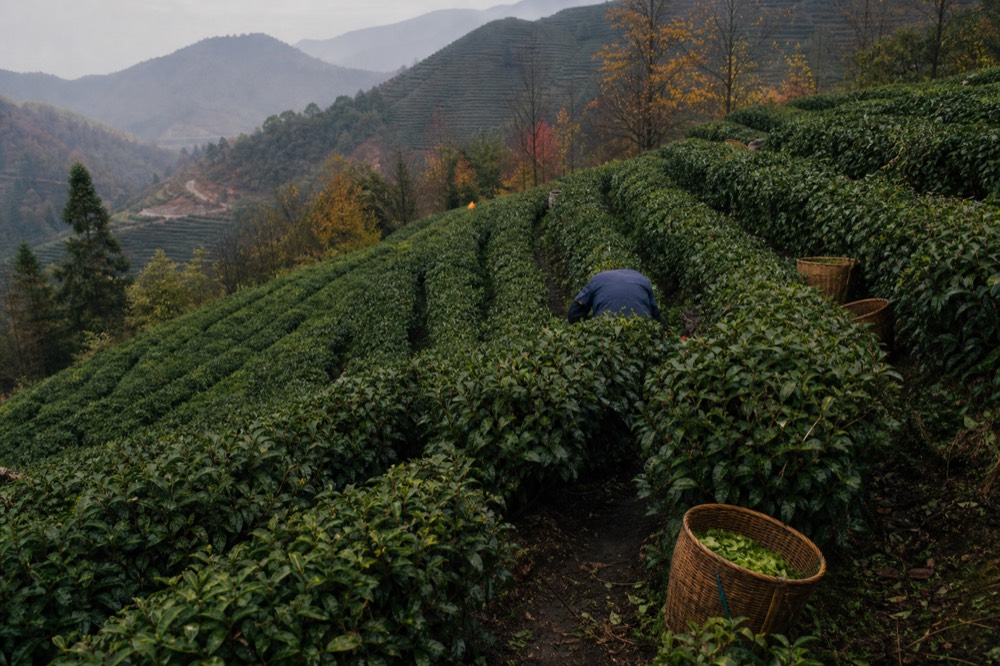
The harvest calendar matters if you are timing a visit. Maokong tea is picked twice a year, in spring around April and May, and again in autumn and winter around November and December. Local producers still compete on it: Maokong Tea Master, a producer on the hill, took gold, silver and general awards in both the 2025 spring and the 2025 winter Tieguanyin Excellent Tea Competitions. The Chang Nai-miao Memorial Tea Museum, established in 1995 and run today by his grandson Chang Wei-yi, preserves the story; the ground-floor tea room is free, and the second floor charges admission.
| Tea | Character | Where it grows | Harvest |
|---|---|---|---|
| Muzha Tieguanyin | Dark roasted oolong, mineral, lasting finish | Muzha only, the sole Tieguanyin cultivation area in Taiwan | Spring (Apr-May) and autumn/winter (Nov-Dec) |
| Wenshan Baozhong | Light, floral, minimally oxidised | The wider Wenshan region Maokong sits within | Same two seasons |
For a deeper look at where to drink it, the Maokong tea houses guide covers the individual houses and what to order.
What Is It Like To Sit In A Maokong Tea House?
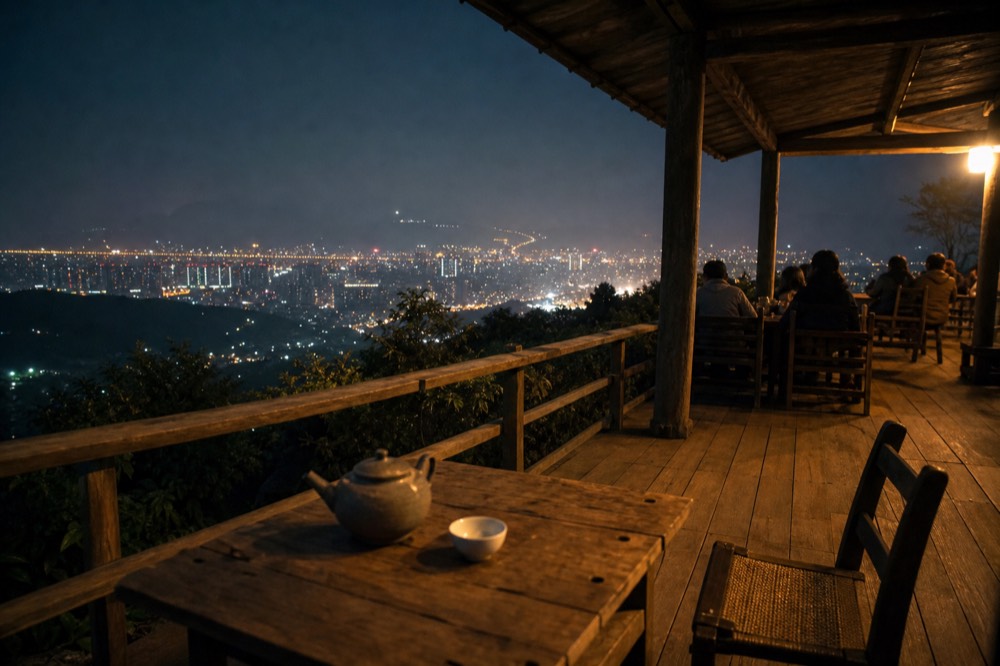
A Maokong tea house is a covered terrace or wooden hall perched on the hillside, where you order a pot of Tieguanyin or Baozhong by the set, and the tea arrives with a small stove to keep it warm while the whole Taipei basin spreads out below you. The ritual is the point. You are not queueing for a counter coffee; you sit for an hour or two, refilling small cups from a clay pot, and the view does the entertaining. On clear evenings the basin lights up, the city's towers marking the distance, and the terraces fill accordingly.
The night view is the reason the gondola runs late. Hours are 09:00 to 21:00 on weekdays and 09:00 to 22:00 on weekends and public holidays, with the operator explicitly noting that hours flex for festivals and events. That weekend extension exists for exactly one crowd: people riding up for sunset and staying for the lights. It works because the line is a continuous loop with no timetable, cabins circulating constantly, so a late-evening descent is just a matter of joining the flow.
The one-day pass is the natural fit for this, because a tea-house evening usually involves a ride up, a wander, and a ride down, and the pass covers unlimited rides on all four passenger stations on the day it is activated. The listing is rated 4.7 from about 11,700 reviews, with over 400,000 booked. Check availability
What Are The Sky Green Deck And The LOVE Sculpture?
Sky Green, a new open-air observation deck at Maokong Station, opened in early January 2026 and gives an unobstructed view over the entire Greater Taipei basin, day and night. Beside it on the station's welcome wall stands a "LOVE" installation built from the gondola's own decommissioned steel haul rope, which the operator says means "true love grows better with age." The two are the newest reasons to linger at the top station rather than walking straight off toward the tea houses. TRTC names Sky Green as a headline reason international visitors come up, and it is a 2026 addition almost no English guide has caught yet.
The LOVE sculpture is a better detail than it first sounds. The haul rope is the cable that carried every cabin for years of service; when it was retired, it was recycled into the letters rather than scrapped. It has made the wall a couples' photo spot, which suits the hill: the Little Sky Trail nearby already had a love-themed cluster of its own, the Yongjie Pavilion, Tongxin Pond and the Moon Elder tree. If your timing is flexible, sunset is the hour that shows the deck at its best, and the operator's hours page is the place to confirm closing time for the day you go.
Which Trails Should You Walk In Maokong?
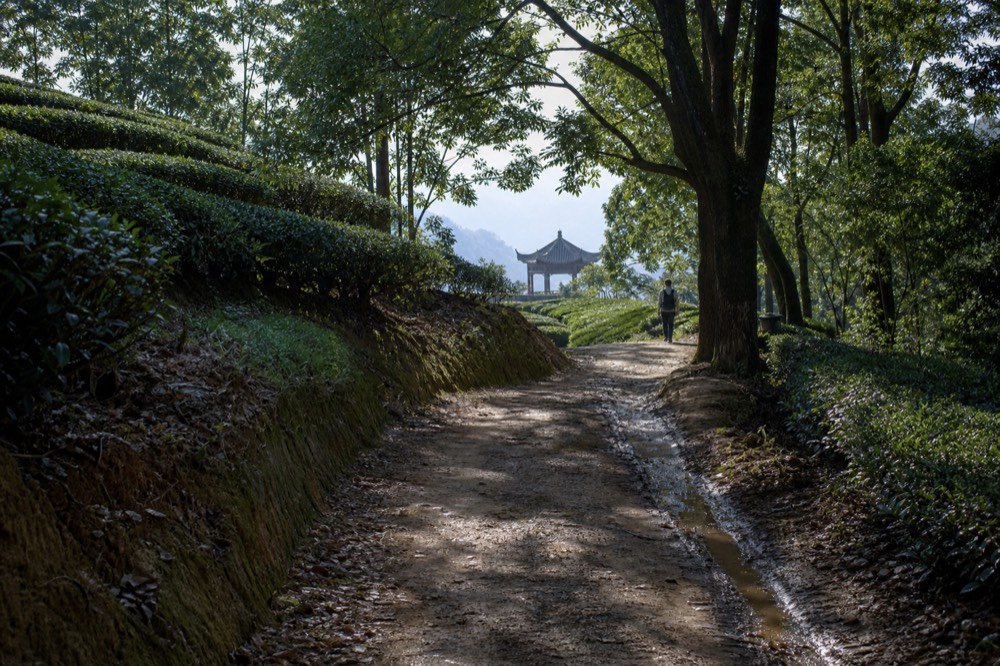
Maokong has eight signposted trails, and the famous one is the Camphor Tree Trail, about 1.5 kilometres and roughly 30 minutes each way, which Taipei promotes as its first fully level trail, walkable end to end by older visitors and small children. The full set, west to east, is Huxue (the pothole trail), Xiao Tiankong (Little Sky), Houshanyue (Monkey Mountain), Zhanghu, Zhinangong (Zhinan Temple), Zhangshu (Camphor Tree), Feilong and Denggao. Denggao is the shortest trail in the area at just 70 metres of wooden stair to the Wangyuan Pavilion lookout.
The Camphor Tree Trail carries the hill's most photographed seasonal event: a 1.5-hectare lupin field, flowering late March to mid-April in yellow, white and blue, which the operator calls the only lupin field of its kind in Taiwan. Around the Mid-Autumn Festival the same slope turns to orange and pink cosmos. The trail is lined with restored rural pieces, a charcoal kiln, a pigsty, an ox cart, a granary, Caiyun Pavilion and Mingjing Pond, so it reads as a walk through the hill's farming past.
| Trail | Length | What it is known for |
|---|---|---|
| Camphor Tree Trail | About 1.5 km, 30 min one way | Taipei's first fully level trail, lupin field late March to mid-April, restored charcoal kiln |
| Denggao Trail | 70 m | Shortest trail in the Maokong area, wooden stair to Wangyuan Pavilion |
| Little Sky Trail | About 250 m | Elevated boardwalk, valley view, love-themed pavilions and Moon Elder tree |
| Zhanghu Trail | Half-moon loop | Terraced tea gardens, links with Camphor Tree Trail via Zhangshan Temple |
The hiking trails guide walks through all eight in detail, including the Silver Stream Cave waterfall grotto, where a small temple to Lü Dongbin and Guanyin is built into the cliff face between two tiers of falling water.
What Does The Name Maokong Actually Mean?
Maokong is not named after cats. The operator's own account says the streambed here is riddled with potholes ground out by swirling stones, terrain locals called "liâu-khang" in Taiwanese Hokkien, and Japanese-era surveyors, registering the land, wrote the name with the phonetically similar characters that read "cat empty" in Mandarin, and the spelling stuck. The popular "cat hole" reading is a back-formation from the characters, not the origin. The potholes themselves are about 20 metres wide and 100 to 200 metres long, formed in igneous rock, and from a distance the overlapping hollows look like a row of face masks, which earned them the local nickname "stone face buckets."
This is one of the better pieces of information gain on the whole topic: nearly every English page repeats the cat story, and the official site contradicts it. The potholes are still there to see, on the Huxue trail, the first of the eight. It is a name that carries its own geology, and knowing it changes how the trail reads.
Where Does Zhinan Temple Fit In?
Zhinan Temple, founded around 1890 to 1891 on Monkey Mountain, is the multi-faith temple complex at the gondola's third station, dedicated to Lü Dongbin, one of the Eight Immortals, and blending Taoist, Buddhist and Confucian halls, reached by a stone stairway of 1,185 steps rebuilt in 1936 with Japanese-era lanterns along the way. The temple predates everything else on this page's fame list; a 1932 newspaper article was already weighing the feasibility of a cable car up to it, and plans were floated through the 1950s and 1960s before the gondola finally opened in 2007.
Two things make it current. First, the legend that couples who visit together will break up is disputed by the temple itself, whose cultural centre notes that Japanese-era songs record couples praying here for lasting love, and that an immortal would hardly begrudge anyone's happiness. Second, on 24 August 2026 a fire severely damaged Lingxiao Hall, a six-storey structure completed in 1966 that once appeared in the 1969 Gregory Peck thriller "The Chairman" standing in for Mao Zedong's Beijing residence. No injuries occurred, the rest of the complex stayed open, and restoration is expected to take at least three years and more than NT$100 million. The Zhinan Temple guide covers the halls and the climb.
What Is Maokong NOT Famous For, But Should Be?
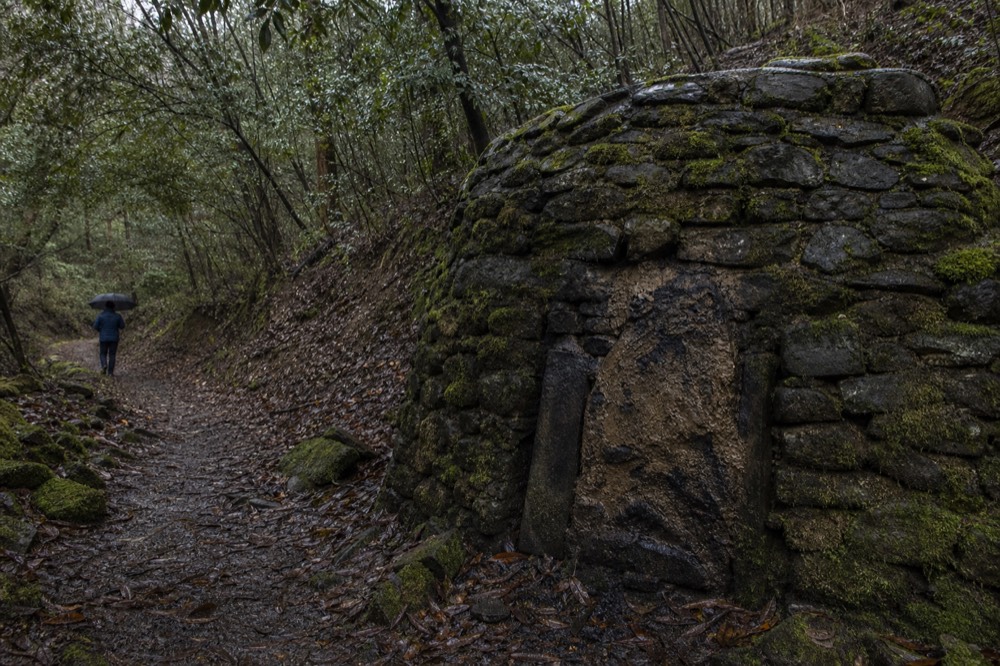
Maokong is not famous for its tea-processing history, and it should be: the hill still holds the charcoal kilns that once fired its tea roasting, restored and explained on the Camphor Tree Trail, where lychee, longan and acacia logs were held at 350 to 1,050 degrees for about two weeks, then sealed and left to smoulder for 5 to 10 days more before cooling. That is a two-week process to make one firing's worth of charcoal, and the charcoal then roasted the Tieguanyin that made the hill famous. Almost nobody who rides up knows any of this.
The same under-told story runs through the Taipei Tea Promotion Center for Tie Guanyin and Bao Zhong Tea, opened in 1985 and renamed in 1999, which holds an exhibition area on tea production, an ecological pond, a weather observation platform, an artificial rainfall erosion trough and a working tea plantation, open daily 09:00 to 17:00 and closed Mondays. It is about 15 minutes' walk from Maokong Station, turning left out of the station. Between the kilns, the museum, and the twice-yearly hand harvest, Maokong is a working tea landscape that most visitors treat only as a viewpoint.
These are the questions visitors ask most about what the hill is known for, answered from the operator's own published material: the tea and its 1895 origin, the name and its pothole geology, the night view, the trails, and the newest addition at the top station. Each answer below is short enough to plan around and points back to the section above where the detail lives.
Common Questions About Maokong
What Is Maokong Famous For?
Maokong is famous for Muzha Tieguanyin tea, its hillside tea houses with views over the Taipei basin, the night panorama that keeps the gondola running until 22:00 on weekends, and the Maokong Gondola itself, plus the Sky Green deck that opened in January 2026 and the eight signposted trails around the station.
Is Maokong Named After Cats?
No. The name comes from the Hokkien term "liâu-khang" for the pothole-riddled streambed, which Japanese-era surveyors wrote with characters that read as "cat empty" in Mandarin. The official operator account confirms the cat reading is a later back-formation.
What Tea Is Maokong Known For?
Muzha Tieguanyin, a roasted oolong, and Wenshan Baozhong, a lighter floral tea. Muzha is the only place in Taiwan where Tieguanyin is cultivated, from twelve seedlings Chang Nai-miao carried from Fujian in 1895.
Is Maokong Worth Visiting At Night?
Yes, the night view over the Taipei basin is the reason the gondola extends its hours to 22:00 on weekends and public holidays. Tea house terraces fill around sunset, and the Sky Green deck at Maokong Station is open for both day and night views.
Can You Hike In Maokong?
Yes. Eight signposted trails cross the area, from the 70-metre Denggao Trail to the level 1.5 km Camphor Tree Trail, which holds the lupin field flowering late March to mid-April and the restored charcoal kilns.