Maokong Hiking Trails: Every Signposted Route From The Gondola Stations
Maokong's gondola gets the headlines, but the hillside it serves carries one of the densest networks of signposted walking trails in the Taipei area: eight named routes, a 70-metre micro-trail, a fully level path built for small children and grandparents, and a waterfall cave tucked into a cliff.
Short answer
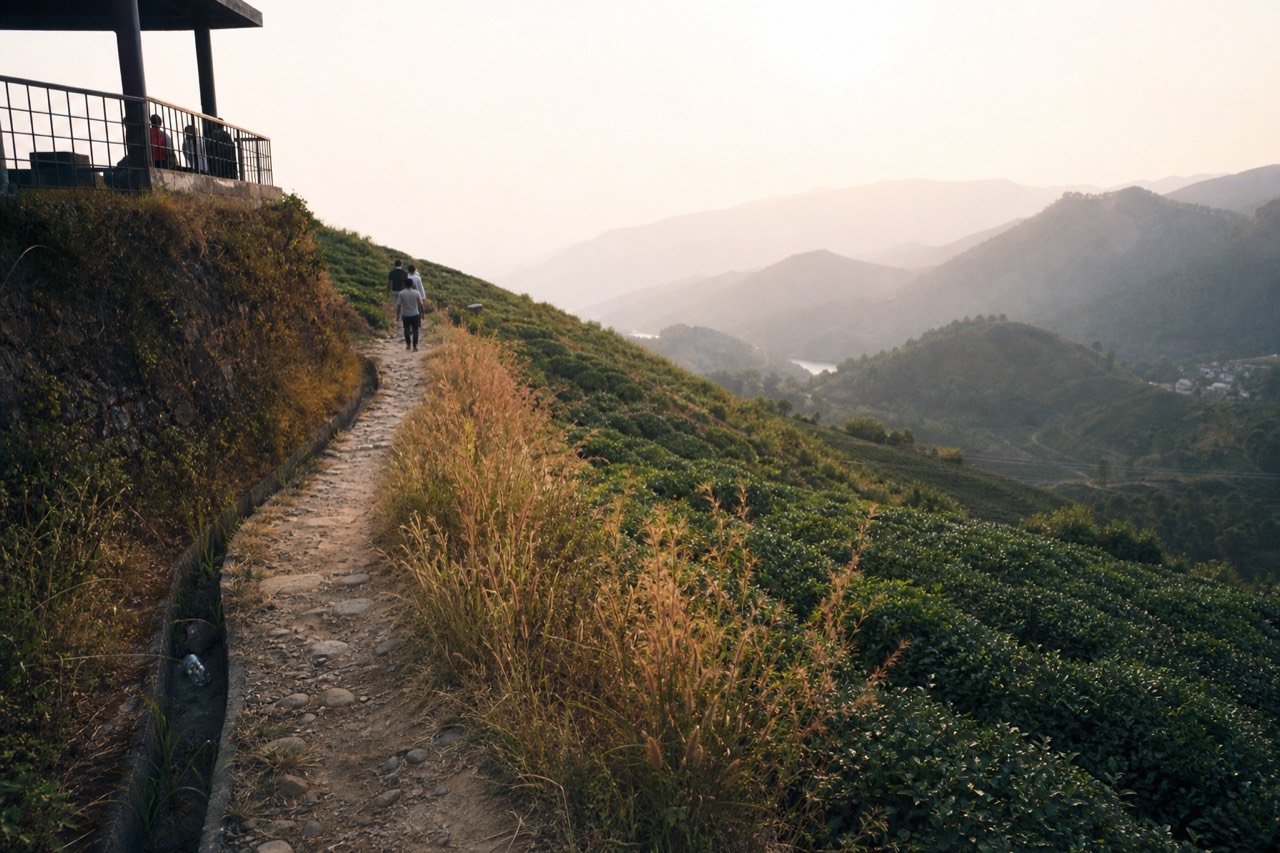
Maokong has eight signposted trails, west to east: Huxue, Xiao Tiankong (Little Sky), Houshanyue, Zhanghu, Zhinangong, Zhangshu (Camphor Tree), Feilong and Denggao. The shortest is 70 metres, the Camphor Tree Trail runs about 1.5 km fully level, and Silver Stream Cave sits at 220 m elevation with a 940 m ridge trail behind it.
Maokong's gondola gets the headlines, but the hillside it serves carries one of the densest networks of signposted walking trails in the Taipei area. The operator counts eight named routes, and they range from a 70-metre stairway to a half-day loop through terraced tea gardens. Almost none of this is mapped properly in English anywhere else, which is a genuine loss, because the trails are the second reason, after the tea houses, that people ride up at all. This guide walks through every signposted route, what each one actually looks like underfoot, and how the gondola's four stations stitch them into loops you can finish in an afternoon.
The trail network works as a set of interlocking paths around the top station rather than one long route. You can ride up, walk two or three trails, and ride down, or string several together and descend on foot to the MRT. Everything below comes from the operator's own trail pages and the Taipei City sources that maintain the paths.
What Hiking Trails Can You Walk From Maokong Station?
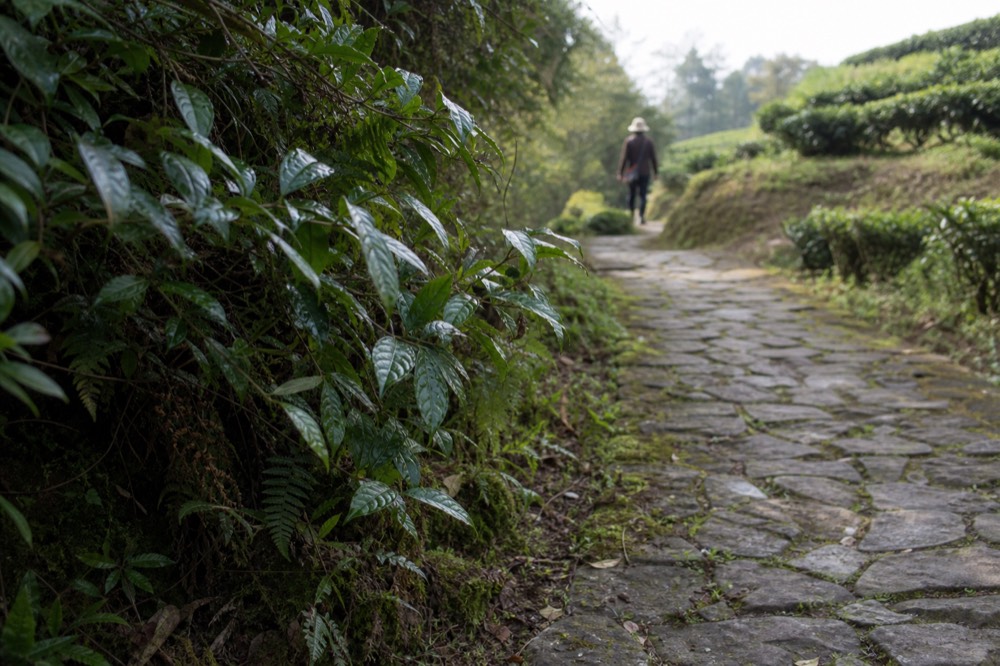
The operator signposts eight trails in the Maokong area, listed west to east as Huxue (the pothole trail), Xiao Tiankong (Little Sky), Houshanyue (Monkey Mountain), Zhanghu, Zhinangong (Zhinan Temple), Zhangshu (Camphor Tree), Feilong and Denggao, and every one of them is reachable on foot from a gondola station or a short walk down Zhinan Road. That count comes from the operator's own trail overview page. The trails differ enormously in length and difficulty, so the honest way to plan is to pick two or three that suit your legs and your available time, then connect them using the road or the free tour bus rather than attempting everything in one go.
The names are worth a moment before you set out. Huxue refers to the streambed potholes that gave Maokong its name, the geological feature the whole area is named after. Houshanyue is Monkey Mountain, the 553-metre hill that Zhinan Temple sits on. Zhanghu and Zhangshan Temple anchor the western tea-garden side of the valley, while Feilong and Denggao sit closest to the station cluster and the viewpoints. If you remember nothing else, remember the split: the western trails are gentler and tea-focused, the eastern and southern ones climb.
| Trail | Character | Best for |
|---|---|---|
| Huxue (pothole) | Streambed geology, the feature Maokong is named for | A short look at the potholes themselves |
| Xiao Tiankong (Little Sky) | About 250 m elevated boardwalk, valley views, love-themed cluster | Couples, a quick viewpoint walk |
| Houshanyue (Monkey Mountain) | Climbing forest trail on the 553 m temple hill | A proper workout above Zhinan Temple |
| Zhanghu | Half-moon route through terraced tea gardens | Tea scenery, links to the Camphor Tree loop |
| Zhinangong (Zhinan Temple) | The 1,185-step historic stone stairway | Climbers, temple visitors walking down |
| Zhangshu (Camphor Tree) | About 1.5 km, fully level, lupin field | Families, older walkers, flower season |
| Feilong | Station-side hillside route near the viewpoints | Short walks between tea-house stops |
| Denggao | 70 m wooden stair to Wangyuan Pavilion | The shortest signposted trail in the area |
For orientation, the operator's own station-and-route material is the best starting point, and this site's stations and route map guide breaks down where each of the four passenger stations sits relative to the trailheads.
Which Maokong Trail Is The Easiest For Families And Older Walkers?
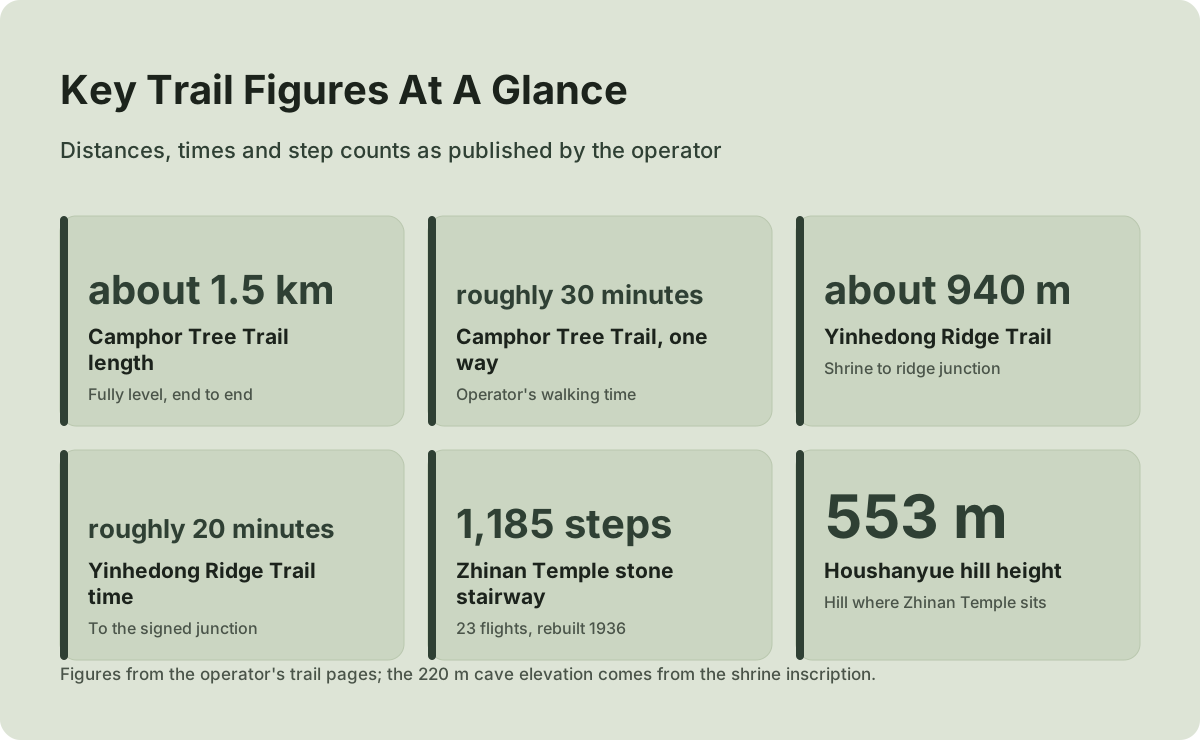
The Camphor Tree Trail (Zhangshu Trail) is the answer, and it is not close: about 1.5 km end to end, roughly 30 minutes one way, and Taipei's first fully level trail, built so that older visitors and small children can walk the whole thing comfortably, with restored rural pieces along it including a charcoal kiln, a pigsty, an ox cart, a granary, Caiyun Pavilion and Mingjing Pond. The operator's phrasing on the levelness is unusually emphatic, and it matches reality: the trail was deliberately engineered without stairs, following the contour of the hillside through the tea fields. If you are traveling with a stroller, a grandparent with bad knees, or a toddler who walks at toddler speed, this is your route and there is no runner-up.
The Camphor Tree Trail also carries the area's single biggest floral draw. A 1.5-hectare lupin field along the slope flowers late March to mid-April in yellow, white and blue, and the operator calls it the only lupin field of its kind in Taiwan. Around the Mid-Autumn Festival the same slope flips to orange and pink cosmos. The flowering windows are short, so if lupins are the reason you are going, aim for the first half of April and check recent photos rather than trusting a fixed date, since bloom timing shifts with the spring weather.
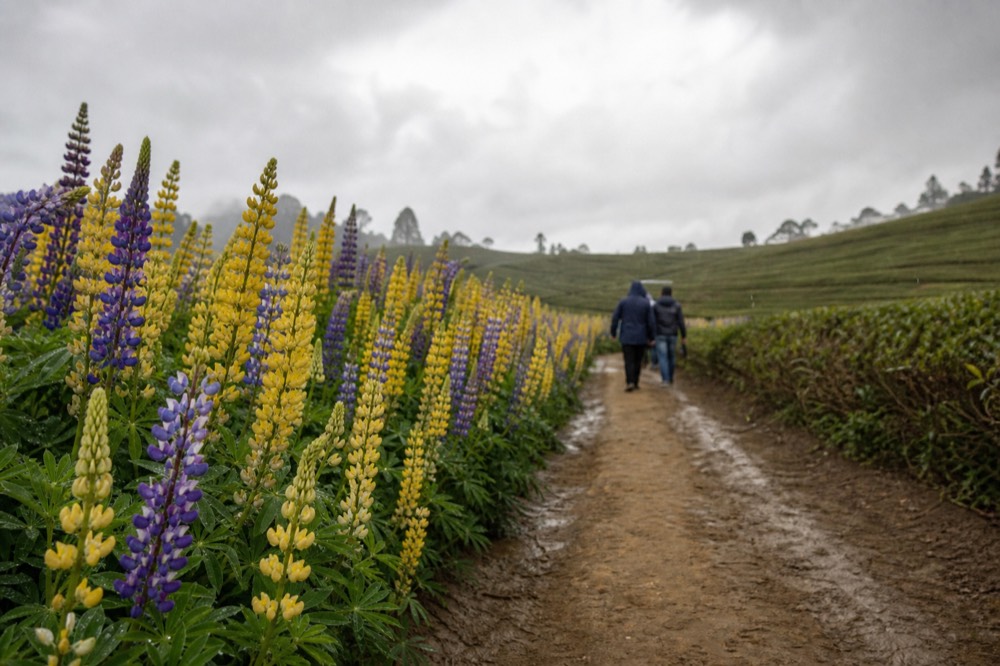
The trail connects at its far end, via Zhangshan Temple, to the Zhanghu Trail, which lets you turn the walk into a loop back toward Maokong Station. Zhangshan Temple itself was built in 1931 and dedicated to Guanyin after a local resident found a rock shaped like the bodhisattva, and its forecourt doubles as one of the best free viewpoints over the Taipei basin. A temple visit costs nothing, so the whole loop is one of the better free half-days on the hill.
| Camphor Tree Trail detail | What to expect |
|---|---|
| Length and time | About 1.5 km, roughly 30 minutes one way |
| Gradient | Fully level, Taipei's first such trail |
| Rural pieces en route | Charcoal kiln, pigsty, ox cart, granary, Caiyun Pavilion, Mingjing Pond |
| Flower season | Lupins late March to mid-April; cosmos around Mid-Autumn Festival |
| Loop option | Continue via Zhangshan Temple (built 1931) to the Zhanghu Trail |
What Is Silver Stream Cave And How Do You Reach It?
Silver Stream Cave (Yinhedong) is a waterfall grotto on the upper Meizailiao Creek at 220 m elevation per the shrine inscription, where the waterfall drops in two tiers with an overhung cave between them and a small temple to Lü Dongbin and Guanyin built into the cliff face, and from the shrine the Yinhedong Ridge Trail runs about 940 m, roughly 20 minutes, to a ridge junction with signs toward Zhanghu, Zhangshan Temple and Maokong. It is the most dramatic single sight on the network, and the one that feels least like a city park. The cave temple is small, damp and genuinely atmospheric, with water running past the shrine itself.
The practical catch is access. Silver Stream Cave sits below and west of the main station cluster, and the standard approach is from the Zhanghu end of the Camphor Tree and Zhanghu trails rather than straight down from Maokong Station, so it works best as the far point of a loop rather than a standalone destination. Walk out along the Camphor Tree Trail, continue to the cave, then take the ridge trail up to the junction and follow signs back toward Zhanghu or Zhangshan Temple. Give the whole thing three to four hours at a relaxed pace, more in summer heat.
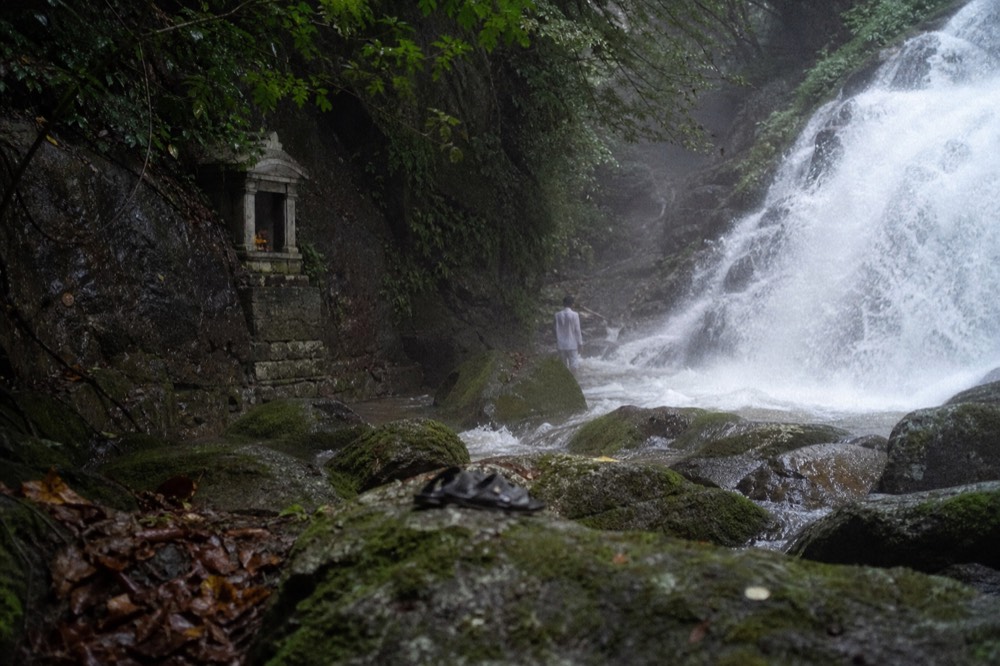
One honest caveat: the 220 m elevation figure comes from the inscription inside the shrine, not from a survey marker, and the 940 m ridge-trail figure comes from the operator's trail page. Both are the best numbers published anywhere, but treat them as indicative rather than surveyed. The trail itself is well signed once you are on it, and the junction at the top is unambiguous.
How Hard Is The Zhinan Temple Stone Stairway?
The historic trail from the archway at Lane 33, Section 3 of Zhinan Road up to Zhinan Temple runs more than 900 metres and climbs 23 flights totalling 1,185 stone steps, usually rounded in coverage to about 1,200, rebuilt in 1936 with Japanese-era stone lanterns and stone benches still standing along the way, and indicative climb times from modern accounts and a 1926 description by painter Kinichiro Ishikawa put the ascent at 30 to 40 minutes. The precise step count comes from the operator's own English attractions page, which is the most exact source published anywhere. It is a proper staircase workout, shaded by palm and pine, with a Japanese-era stone archway at the trailhead and paired lanterns on the landings carrying donors' names and dates.
The temple at the top rewards the climb. Zhinan Temple was founded around 1890 to 1891, its main deity is Lü Dongbin of the Eight Immortals, and the complex blends Taoist, Buddhist and Confucian halls across dozens of hectares. One thing to know before you go: on the evening of 24 August 2026 a fire severely damaged Lingxiao Hall, destroying the first floor and part of the second, with no injuries, and restoration is expected to take at least three years and more than NT$100 million. The rest of the complex has remained open, with some rituals relocated to other halls. This site's Zhinan Temple guide covers the temple, the fire and the famous legend about couples in full.
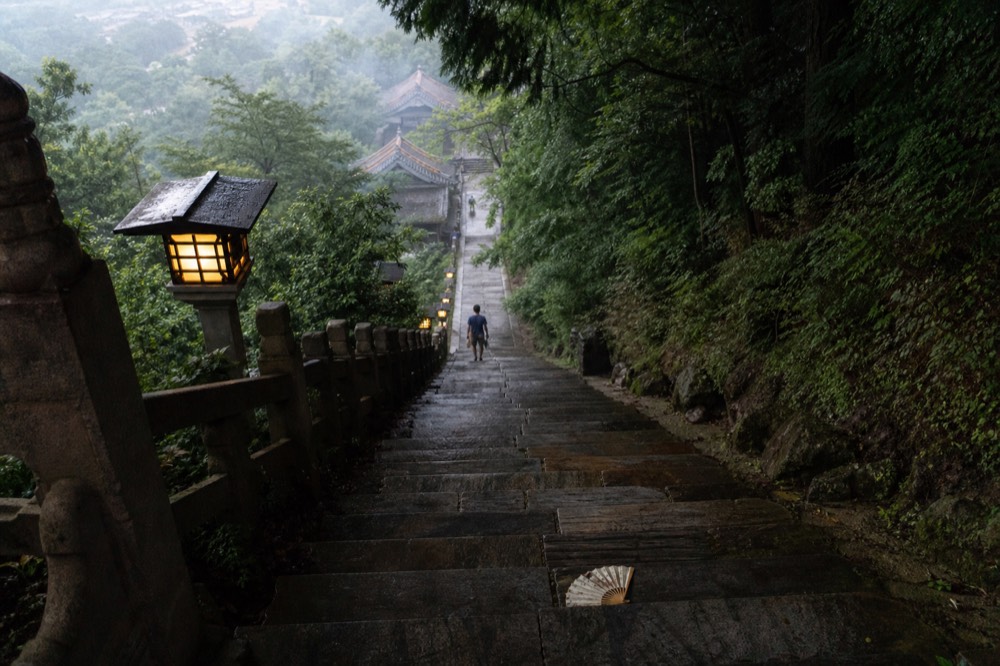
The smart way to walk the stairway is down, not up. Ride the gondola to Zhinan Temple Station, spend time at the temple complex, then descend the 1,185 steps to the trailhead on Zhinan Road, from where buses run back toward the MRT. Going down saves your knees nothing but spares your lungs, and the stone benches from 1936 are placed exactly where you will want them. If you would rather climb, start early before the midday heat, because the upper flights hold summer sun despite the tree cover.
What Are The Tea-Garden Trails: Zhanghu And The Circular Route?
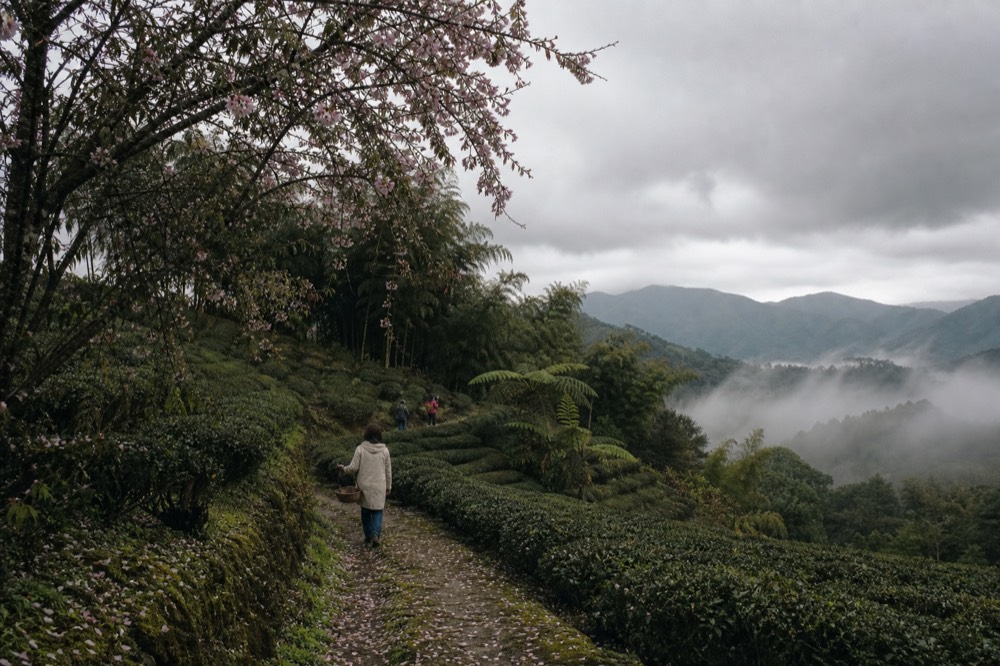
The Zhanghu Trail is a half-moon-shaped route through terraced tea gardens, walkable directly from Maokong Station, which links with the Camphor Tree Trail via Zhangshan Temple to form a loop, with tung blossom peaking along it in April and May. This is the trail that shows you what Maokong actually is: a working tea landscape, not a theme park. The terraces on this side of the valley grow Muzha Tieguanyin and Wenshan Baozhong, the two teas of the hillside, and the trail threads between the plots on farm tracks. It is gentle by Taiwanese hillside standards, mostly contouring rather than climbing, and it is the natural companion walk to a tea-house lunch.
The other tea walk worth naming is the short path from Maokong Station to the Taipei Tea Promotion Center for Tie Guanyin and Bao Zhong Tea. Turn left out of the station, follow Lane 38 of Section 3 Zhinan Road toward Tianen Temple, and it is about 15 minutes on foot. The center, opened in 1985 and renamed in 1999, holds an exhibition area on tea production, a teaching area, an ecological pond, a weather observation platform, an artificial rainfall erosion trough and a working tea plantation, and it is open daily 09:00 to 17:00, closed Mondays. It is the best free primer on why this hillside grows what it grows.
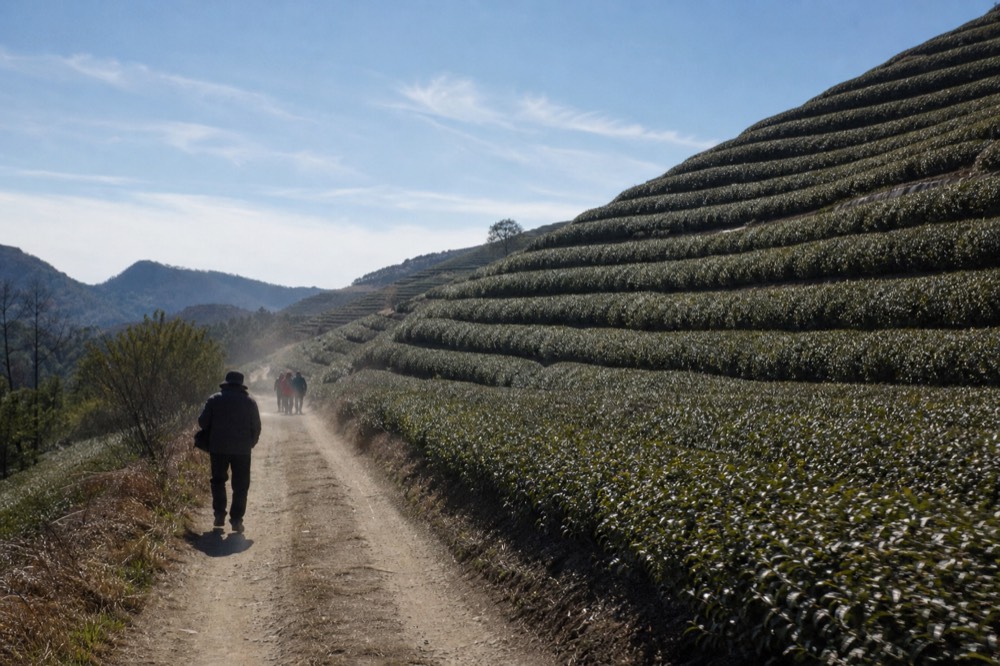
For the story behind those terraces, the short version is that tea master Chang Nai-miao brought twelve Tieguanyin seedlings from Fujian in 1895, and Muzha remains the only place in Taiwan where Tieguanyin is cultivated. The hillside's tea is harvested twice a year, in spring around April and May and in autumn and winter around November and December, so the terraces look and smell different depending on when you walk them.
What Are The Shortest Trails And The Viewpoint Walks Near The Station?
The Denggao Trail is 70 metres long, making it the shortest signposted trail in the Maokong area, running up a wooden stair to the Wangyuan Pavilion lookout through silver grass and cherry trees opposite Mingde Temple, while the Little Sky Trail runs about 250 m as an elevated boardwalk with a wide-angle view down into the Maokong valley, featuring the Yongjie Pavilion, Tongxin Pond and the Moon Elder tree. Between them they take well under an hour combined, and they are the two walks you do in the gap between arriving at Maokong Station and finding your tea house. The Little Sky boardwalk starts by the Tianwen teahouse pavement and ends at a Tudigong shrine below the car park.
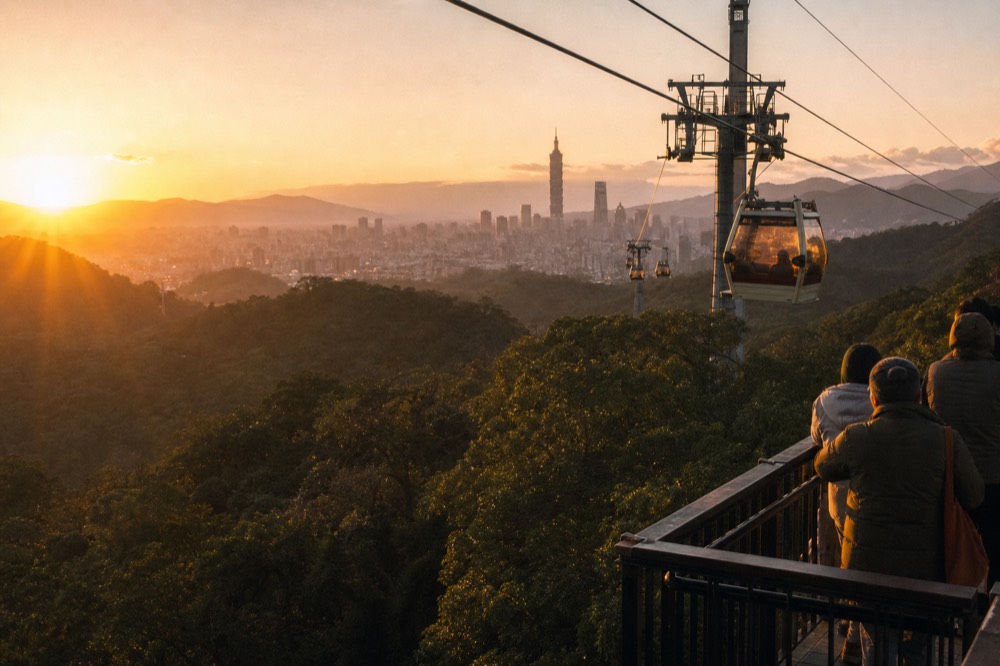
The Moon Elder tree deserves a specific mention for couples. The Little Sky cluster, Yongjie Pavilion, Tongxin Pond and the tree itself, is a love-themed corner of the hill, and it pairs with the LOVE installation at Maokong Station itself, a sculpture built from the gondola's own decommissioned haul rope. Since the start of 2026 the station also has a new observation deck, Sky Green, giving an open view over the whole Greater Taipei basin day and night. So the station area alone now offers a deck, a rope sculpture, a boardwalk and a love shrine within a few hundred metres of each other.
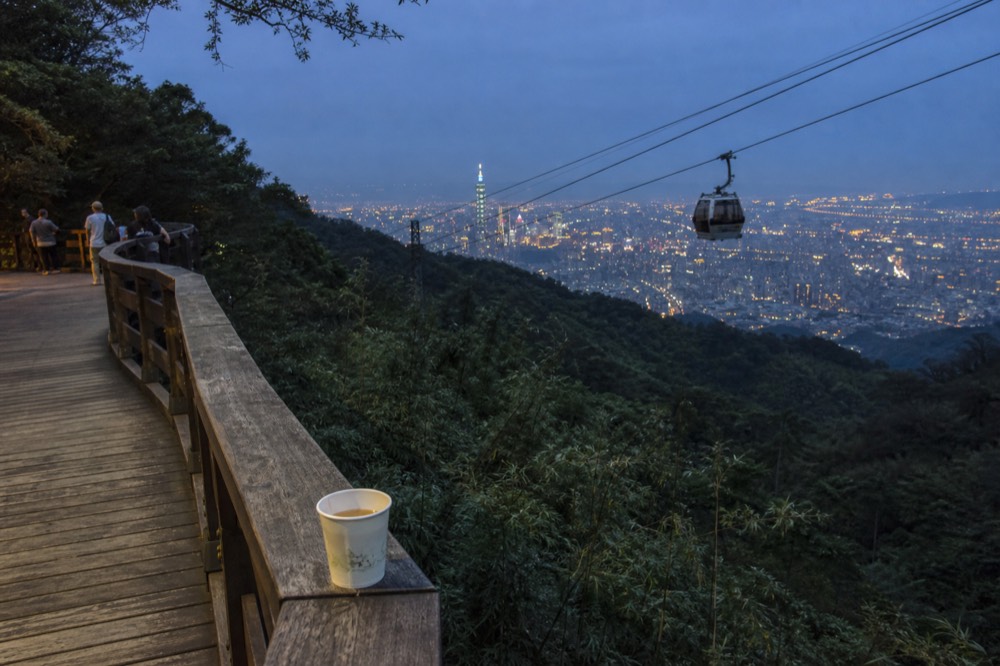
One longer option for serious walkers sits just outside the signposted eight: the Maokong Trail proper, tracked on hiking apps at about 5.4 miles with roughly 1,686 feet of elevation gain and rated moderate. That figure comes from a crowd-sourced trail database rather than the operator, so treat it as indicative, but it gives a sense of what a full crossing of the area involves if you link the signposted paths into one long day. Most visitors should not attempt it in summer heat without plenty of water.
When Is The Best Time Of Year To Walk The Maokong Trails?
The operator's own seasonal calendar runs apricot blossom in January and February, lupin in February and March, tung blossom in April and May, bamboo shoots in May and June, and spring tea in May and June. Its own Camphor Tree Trail page dates the lupin field later, to late March and mid-April, and that is the window to plan around, so the single best window for flowers is late March to mid-April, when the Camphor Tree Trail's 1.5-hectare lupin field is at peak and the tung blossom is beginning on the Zhanghu side. The Apricot Blossom Grove, a private tea farmer's garden of roughly 2,000 trees planted across about 1.9 hectares, flowers January to mid-March in red, white and pink, is free to enter, and is billed as northern Taiwan's largest apricot grove. If you can only come once, come in that early-April window.
| Months | What is happening on the trails |
|---|---|
| January to February | Apricot blossom in the Apricot Blossom Grove, roughly 2,000 trees, free entry |
| February to March | Lupin season begins on the Camphor Tree Trail slope |
| Late March to mid-April | Peak lupin field, 1.5 hectares, the best single flower window |
| April to May | Tung blossom on the Zhanghu Trail and the upper Zhinan Temple trail |
| May to June | Bamboo shoots and spring tea harvest on the terraces |
| Around Mid-Autumn Festival | Orange and pink cosmos replace the lupins on the same slope |
Summer is the season to be careful about rather than to avoid. The trails are shaded in parts but the climbs, especially the Zhinan Temple steps and anything around Monkey Mountain, are punishing in July and August heat, and those two months are also the peak of Taipei's typhoon season, which runs from May 1 to November 30. Gondola service suspends when gusts reach 16 m/s or lightning is detected anywhere along the route, and the same storms close trails. The weather and suspensions guide explains the rules, including the fact that stranded passengers are brought down the mountain by free shuttle bus.
Autumn and winter are the connoisseur's seasons. The cosmos replaces the lupins around Mid-Autumn Festival on the Camphor Tree Trail slope, the air is clearer after typhoons pass, and the tea houses do their best business. Winter solstice brings the annual tea-sealing ceremonies, and the spring and autumn/winter tea harvests, roughly April to May and November to December, mean fresh tea on the hillside twice a year.
How Do You Plan A Trail Day Around The Gondola?
The one-day gondola pass is the natural trail-day ticket because it covers unlimited rides across all four passenger stations on the day of activation, letting you ride to Maokong Station, walk a trail loop, and rejoin the system at a different station, and gondola ticket holders can also ride the Maokong Right Line and Left Line tour buses free on the same day, which is the mechanism for turning point-to-point trails into loops. The pass is sold from about $9.49 on the live listing, which carries about 11,700 reviews averaging 4.7. The tour bus detail matters more than most visitors realise: the Right Line runs from Maokong Station past the north entrance of the Camphor Tree Trail, Zhangshan Temple, the telescopic deck, the Apricot Grove and the south entrance, on weekdays 09:00 to 20:00 and weekends 08:30 to 20:00, with a last trio of departures at 19:00, 19:30 and 20:00 that catches out walkers returning after sunset.
A sensible shape for a first trail day looks like this. Ride to Maokong Station in the morning, walk the Little Sky boardwalk and the new Sky Green deck, then take the Camphor Tree Trail out through the tea fields to Zhangshan Temple. From there either continue to Silver Stream Cave and back via the ridge trail, or turn back along the Zhanghu Trail for tea-house lunch. In the afternoon, ride one station down to Zhinan Temple Station for the temple complex, then take the gondola the rest of the way down before the 21:00 weekday or 22:00 weekend closing. That is a full day, and it uses the pass exactly as designed.
| Leg of the day | How | Notes |
|---|---|---|
| Morning ascent | Gondola to Maokong Station | Station walks: Little Sky boardwalk, Sky Green deck |
| Main walk | Camphor Tree Trail to Zhangshan Temple | Level, about 1.5 km, roughly 30 minutes |
| Extension | Silver Stream Cave and the 940 m ridge trail | Adds three to four hours at a relaxed pace |
| Afternoon | Gondola one stop to Zhinan Temple Station | Temple complex, then descend the 1,185 steps or ride down |
| Return | Gondola to Taipei Zoo Station before closing | Weekdays 21:00, weekends 22:00 |
Two planning traps to avoid. First, the gondola closes on many Mondays for maintenance, and the exact Mondays vary month to month, so check the operator's published calendar before committing to a Monday hike; the hours and best time guide carries the dated list. Second, if you plan to walk down to the MRT instead of riding, remember that a single-journey ticket does not cover a return, so factor the fare rules into whether the day pass saves money, which for any trail day involving the tour bus it almost always does.
The trail network is what turns a gondola ride into a day out. Whether you come for the lupins in April, the tea terraces in any season, or the 1,185 steps up to a temple that once stood in for Mao Zedong's Beijing residence in a 1969 Gregory Peck thriller, Maokong Gondola is the lift that makes all of it reachable without a car, and the trails are the reason to stay past the first cup of tea.
Maokong has eight signposted trails reachable from the gondola stations, the shortest being the 70-metre Denggao Trail and the easiest the fully level 1.5 km Camphor Tree Trail, with Silver Stream Cave and the 1,185-step Zhinan Temple stairway as the two headline walks, and the best flower window falling in late March to mid-April. The questions below cover the specifics visitors ask most often, from step counts to bloom timing.
Common Questions About Maokong Hiking Trails
How Many Hiking Trails Are There In Maokong?
The operator signposts eight: Huxue, Xiao Tiankong (Little Sky), Houshanyue, Zhanghu, Zhinangong, Zhangshu (Camphor Tree), Feilong and Denggao, listed west to east. All are reachable on foot from the gondola stations or a short walk along Zhinan Road.
Which Is The Easiest Maokong Hiking Trail?
The Camphor Tree Trail, about 1.5 km and roughly 30 minutes one way. It is Taipei's first fully level trail, built so older visitors and small children can walk the whole thing, and it passes a charcoal kiln, a pigsty, an ox cart, a granary and a 1.5-hectare lupin field that flowers late March to mid-April.
What Is The Shortest Trail In Maokong?
The Denggao Trail, at 70 metres. It runs up a wooden stair to the Wangyuan Pavilion lookout through silver grass and cherry trees, opposite Mingde Temple.
How Do I Get To Silver Stream Cave?
Walk the Camphor Tree Trail from Maokong Station toward Zhanghu, then follow signs to the cave, which sits at 220 m elevation with a small cliff-face temple to Lü Dongbin and Guanyin. From the shrine the Yinhedong Ridge Trail runs about 940 m, roughly 20 minutes, to a junction with signs back toward Zhanghu, Zhangshan Temple and Maokong.
How Many Steps Is The Zhinan Temple Trail?
The historic stone stairway has 23 flights totalling 1,185 steps over more than 900 metres, usually rounded in coverage to about 1,200. It was rebuilt in 1936, and indicative climb times run 30 to 40 minutes. Many walkers prefer to ride the gondola up and walk down.
When Do The Lupins Bloom On The Camphor Tree Trail?
Late March to mid-April, in yellow, white and blue across a 1.5-hectare field the operator calls the only one of its kind in Taiwan. Around the Mid-Autumn Festival the same slope turns to orange and pink cosmos.