What Is Taipei Famous For?
A specific, honest answer to what Taipei is famous for, from the skyline tower and the zoo to night markets, tea country above Muzha, and the gondola that ties the south of the city together.
What Is Taipei Famous For?
Taipei is famous for four things that genuinely hold up: the bamboo-stalked tower that anchored its skyline from 2004, a city zoo with giant pandas at the end of a metro line, a street-food and night-market culture that locals treat as daily life rather than a show, and the tea country on the hills above Muzha, reached by a cable car that has carried over 40 million passengers since 2007. Most itineraries cover the first three and skip the fourth, which is the part that makes the city unusual: a working tea landscape inside the municipal boundary, a short ride from a metro terminus.
That last point deserves emphasis before anything else. Taipei is one of very few capitals where you can take a metro train to a zoo station, transfer to a gondola, and be walking through terraced tea gardens within the hour. The city's own tourism machinery leans on this, stitching the zoo, the cable car and the Maokong hillside into a single "Greater Three-Cat" zone since March 2025, with free bus transfers between them for anyone holding a gondola ticket.
The fame question also has a practical answer. Taipei is known as an easy city for first-time visitors to Asia: compact, anglophone signage on the metro, visa-free entry for 90 days for most Western passport holders, and a food culture that runs from NT$50 noodle stalls to tasting rooms pouring oolong grown inside the city limits. The sections below take each of these in turn, then close with the hill districts, which is where the subject of this site sits.
If a single ticket helps you cover several of these at once, the three options below are the ones worth comparing.
What Landmarks And Institutions Define The City?
Taipei's defining landmark is the bamboo-shaped skyscraper that held the title of the world's tallest building from its 2004 opening until newer rivals rose around it, and the city's signature institutions are the National Palace Museum's imperial collections and Taipei Zoo, a 165-hectare park holding giant pandas, red pandas and roughly 354 species. The tower and the museum get the postcards, but the zoo is the one you can combine with a mountain cable car on the same ticket, which is why it matters for this article.
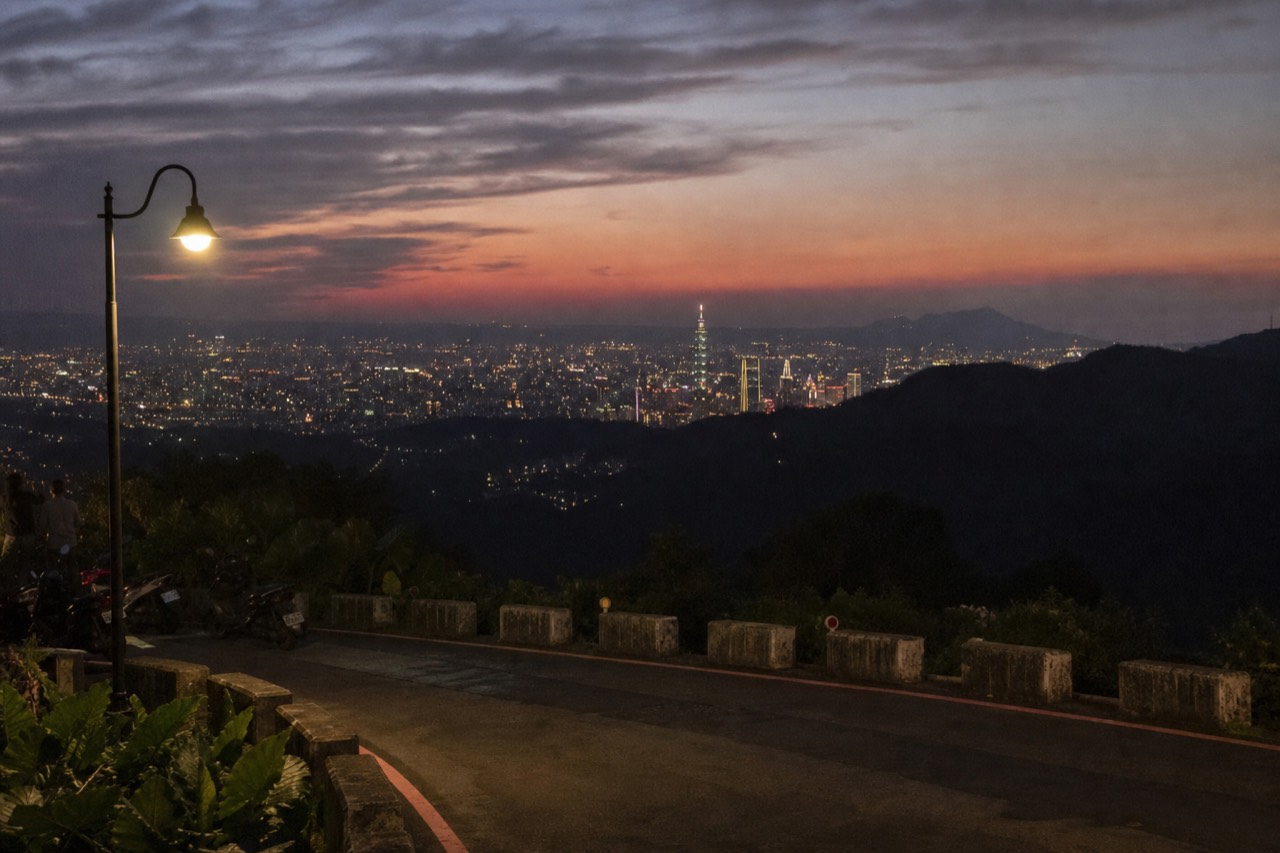
The tower itself is worth a moment of honesty. Visitors sometimes expect the observation deck experience to be the highlight of a Taipei trip and find instead that the building reads best from the outside, from street level in the Xinyi district or from a hillside across the city. That is exactly where the Maokong hillside earns its place in an itinerary: from the top station's new Sky Green deck, opened in January 2026, the whole Taipei basin spreads out below, tower and all, without a queue for an elevator.
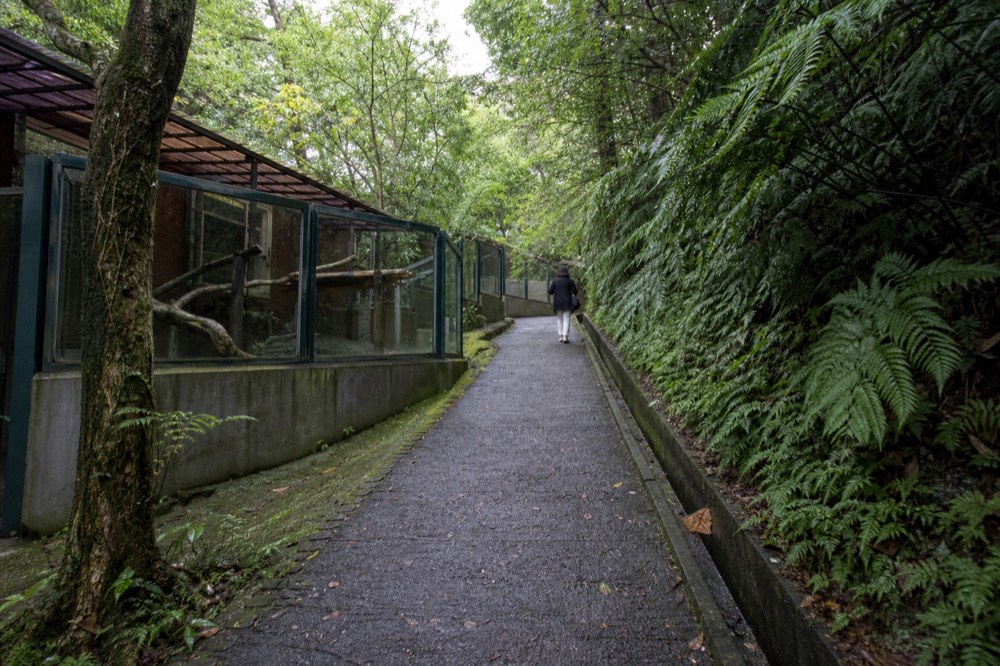
The zoo deserves more credit than it usually gets from travellers passing through. It sits at the end of the Wenhu metro line, and its grounds climb a wooded hillside rather than sitting flat like most city zoos. General admission is NT$100, with entry from 9:00am to 5:00pm and last entry at 4:00pm. Two giant pandas, Yuan Yuan and Yuan Bao, are the headline residents, and a pair of red pandas that arrived from Shanghai debuted publicly in late July 2026.
| Taipei Zoo quick facts | Detail |
|---|---|
| General admission | NT$100 |
| Opening hours | 9:00am to 5:00pm, last entry 4:00pm |
| Annual maintenance closure 2026 | 22 June to 1 July |
| Size | 165 hectares, about 354 species |
| Getting there | MRT Wenhu Line to Taipei Zoo Station, then a 1-3 minute walk |
The Giant Panda House closes on the first Monday of each month while other houses rotate their own Monday closures, so panda-focused visitors should pick their day accordingly. Full details on pairing the zoo with the gondola are in the Taipei Zoo combo guide.
Why Is The Food A Reason People Come?
Taipei is famous for a street-food culture that operates as the city's default way of eating: beef noodle soup, stinky tofu, xiaolongbao dumplings, bubble tea invented in Taiwan, and night markets such as Raohe, Ningxia and Shilin that run into the early hours. Bubble tea in particular has carried the city's name worldwide, and the original tearoom culture behind it, the Taiwanese fondness for oolong, is older and deeper than the drink it spawned.
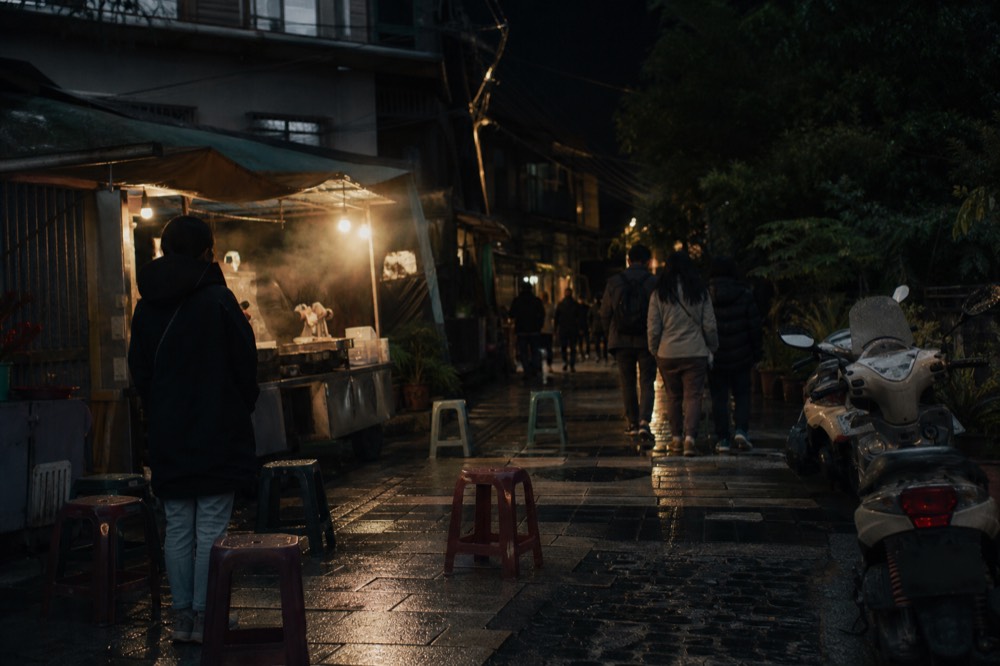
The honest framing is that the night markets are working food infrastructure, not a tourist spectacle. Locals eat there after work. Prices are low by Western standards, and quality varies stall to stall in the way it does anywhere, so the reliable strategy is to queue where locals queue. None of this needs a guide or a booking, which is precisely why it anchors the city's reputation for being easy.
The tea side of the food story is the part that surprises people. Taipei is not just a place that drinks tea, it is a place that grows it, on the Maokong hillside in the city's own Wenshan District. That story deserves its own section, because it changes what a Taipei trip can be.
What Does Tea Have To Do With Taipei's Fame?
Tea made the hills above Muzha famous long before the city had a skyline: tea master Chang Nai-miao carried twelve Tieguanyin seedlings from Fujian in 1895, and Muzha remains the only place in Taiwan where Tieguanyin is cultivated, alongside the region's Wenshan Baozhong. The Maokong plantations sit at roughly 300 to 500 metres and are harvested twice a year, in spring around April and May, and in autumn and winter around November and December.
The city government takes this seriously enough to run a dedicated institution for it. The Taipei Tea Promotion Center for Tie Guanyin and Bao Zhong Tea is open daily 09:00 to 17:00 except Mondays, a roughly 15-minute walk left out of Maokong Station, with exhibition halls, an ecological pond, a weather platform and a working plantation on site. A short walk further stands the Chang Nai-miao Memorial Tea Museum, established in 1995 and run today by his grandson.
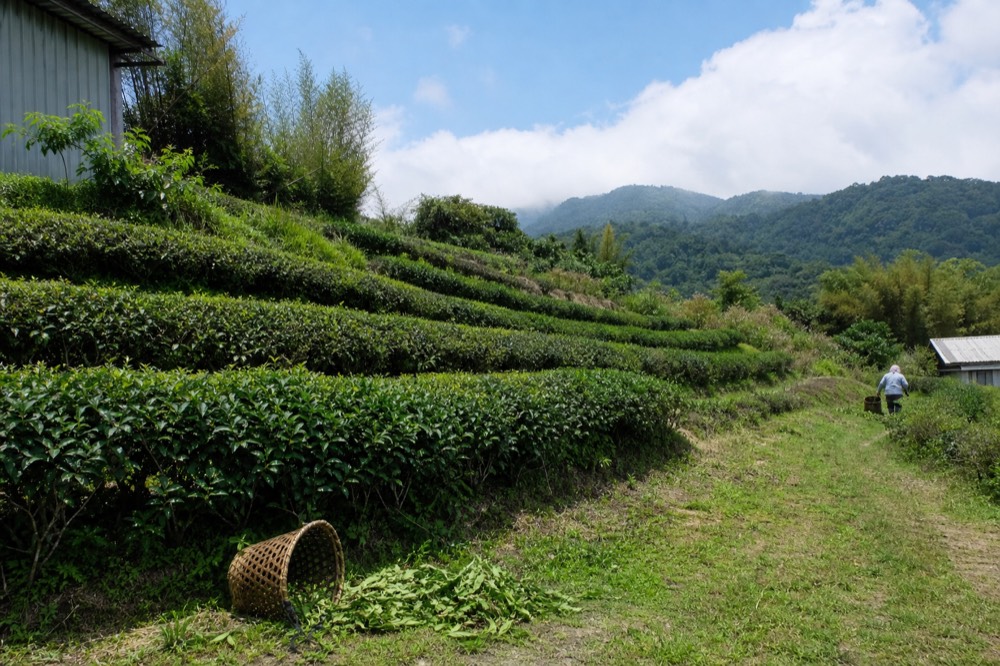
For visitors, this translates into teahouses with valley views, tasting flights of locally grown oolong, and walking trails that pass charcoal kilns once used to fire the tea roasting. The Maokong tea houses guide covers where to sit and what to order. The name of the area, incidentally, has nothing to do with cats, despite the characters: the operator's own account traces it to a Hokkien word for the pothole-riddled streambed, written with similar-sounding characters during the Japanese-era land survey.
If tasting your way through the hillside sounds like the version of Taipei you want, a ticket sorted in advance saves the queue at the bottom station.
How Do The Southern Hills Complete The Picture?
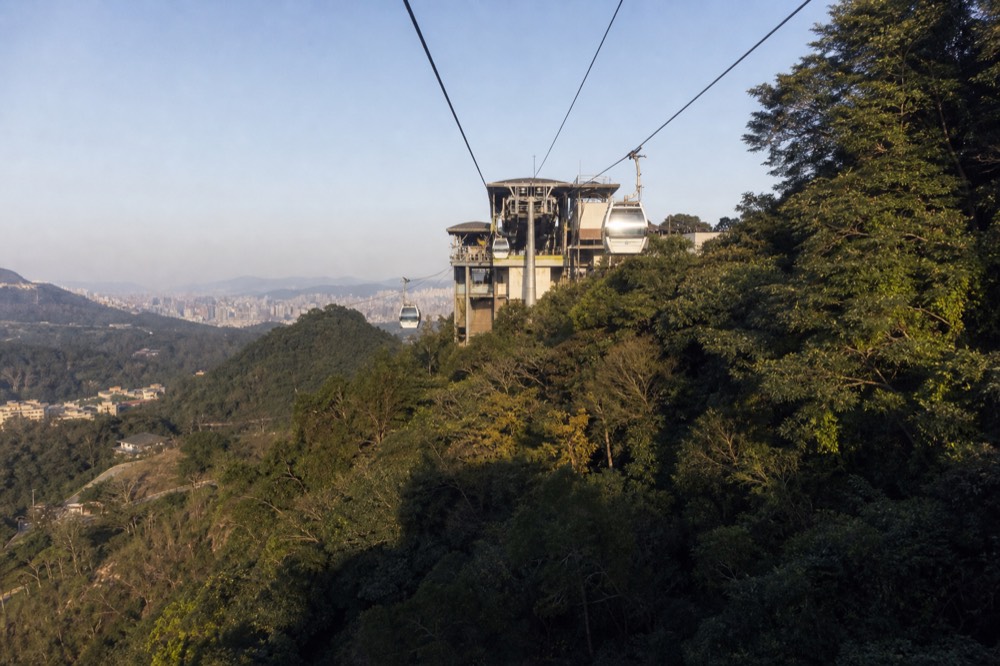
The hills above Muzha are the part of Taipei's fame that most visitors miss: a four-station gondola climbing about 250 metres to tea country, Zhinan Temple's 1,185 stone steps rebuilt in 1936, and a new Sky Green observation deck that opened at Maokong Station in January 2026. Since 3 March 2025 the gondola has charged a flat fare, NT$180 for a single journey or NT$300 for a one-day pass with unlimited rides, replacing the old by-station price scale that most older guides still quote.
The ride itself is part of the city's identity. The system opened on 4 July 2007, passed one million passengers within 81 days, and cumulative ridership crossed 40 million on 19 May 2026. Manufacturer POMA later confirmed in writing an average availability of 99.90% across 2010 and 2011, calling it the best availability rate recorded to date on any cable car system, a striking claim for a line that had reopened only that year after an 18-month closure following typhoon damage near Tower 16.
| Gondola fare | Price |
|---|---|
| Single journey, regular cabin | NT$180 flat |
| One-day pass, regular cabin | NT$300, unlimited rides that day |
| Crystal Cabin upgrade | +NT$50 per person per trip |
| Children 0-5 | Free with a ticketed adult, max 2 per adult |
At the top, the hillside continues the story. Zhinan Temple, founded around 1890 to 1891, blends Taoist, Buddhist and Confucian practice, and its Lingxiao Hall, which once stood in for Mao Zedong's Beijing residence in the 1969 Gregory Peck thriller "The Chairman", was badly damaged by fire on 24 August 2026; the rest of the complex remains open, with restoration expected to take at least three years. The temple itself disputes the old legend that couples who visit together will break up, pointing to Japanese-era songs in which couples prayed there for lasting love.
The hillside also carries a seasonal rhythm that guidebooks rarely time properly. Apricot blossom runs January into mid-March in a grove of roughly 2,000 trees, a 1.5-hectare lupin field flowers late March to mid-April on the Camphor Tree Trail, and tung blossom follows in April and May. Around Mid-Autumn Festival the lupin slope turns over to orange and pink cosmos. A visitor who picks the right fortnight gets a completely different hillside from the one in the standard photos.
For anyone planning to ride up, the one-day pass is the option that matches how the hillside actually works: hop on at the zoo, hop off at Zhinan Temple or the top, and ride again after tea.
Is Taipei Practical For First-Time Visitors?
Taipei is famous for being one of the easiest major Asian cities to get around: a metro system with full English signage, an EasyCard that works across trains, buses and the gondola, visa-free entry for 90 days for most Western nationals, and an online Arrival Card that replaced the paper form in October 2025. The Wenhu Line terminates at Taipei Zoo Station, from which an adult single MRT fare to Taipei Main Station is NT$35, about 40 minutes with one transfer.
Two practical notes are worth knowing. An EasyCard carries a non-refundable issuance fee of NT$100, and stored-value cards are accepted on the gondola at exactly the same fare as a paper ticket, so the card is about convenience rather than savings. For visitors packing many sights into a short stay, the Taipei Unlimited Fun Pass includes a Maokong Gondola one-day pass, with the 1-day adult version at NT$1,300; it only pays off against a genuinely packed itinerary.
Weather is the other practicality. Taipei's typhoon season runs from May to November, peaking in August and September, and the gondola suspends service when gusts reach 16 m/s and hold for more than three seconds, or exceed 18 m/s, or when lightning strikes along the route. If a shutdown strands you at the top, free shuttle buses take passengers back down the mountain, a published rule almost nobody mentions. Post-typhoon days often bring the clearest skies of the year, which is a good time to be up on the hillside looking back at the skyline you came for. The weather and suspensions guide covers the closure rules in detail, and the Maokong Gondola homepage sets out the ticket for the hillside corner of the city.
One last planning note: the gondola closes on many Mondays for maintenance, and the exact dates vary month to month, so check the operator's published calendar before committing a Monday to the hillside. The annual overhaul in late June is the other long gap to plan around.
If the hillside is now on your list, these are the three ticket options to weigh before you go.
Taipei's fame rests on a handful of things that reward specifics over slogans: a skyline tower, a 165-hectare zoo with giant pandas, night markets and bubble tea's birthplace, and a tea-growing hillside above Muzha reached by a cable car that has carried more than 40 million riders since 2007. The questions below cover the details visitors ask about most often.
Common Questions About What Taipei Is Famous For
What Is Taipei Famous For?
Taipei is famous for its bamboo-shaped skyline tower, Taipei Zoo and its giant pandas, a night-market street-food culture including bubble tea's Taiwanese origins, and the tea-growing hills above Muzha reached by the Maokong Gondola, which has carried over 40 million passengers since opening in 2007.
Is Taipei Zoo Worth Including On A First Visit?
Yes. It is a 165-hectare zoo with giant pandas, red pandas and roughly 354 species, admission is NT$100, and it sits at the metro terminus directly below the gondola, so it pairs naturally with a ride up to Maokong.
What Food Is Taipei Known For?
Beef noodle soup, xiaolongbao, stinky tofu and bubble tea, eaten across night markets that run late into the night. The city's tea culture goes beyond the drink: Maokong, inside Taipei's boundary, grows Tieguanyin and Baozhong oolong served in hillside teahouses.
Can You See Tea Plantations Without Leaving Taipei?
Yes. The Maokong hillside in Wenshan District has working tea plantations at roughly 300 to 500 metres, a city-run Tea Promotion Center open daily except Mondays, and teahouses a short walk from the gondola's top station.
How Much Does The Maokong Gondola Cost?
A single journey in a regular cabin is a flat NT$180, and a one-day pass with unlimited rides is NT$300. The glass-floor Crystal Cabin is an on-site upgrade of NT$50 per person per trip on top of whatever ticket you hold.
When Should You Avoid Visiting Taipei?
Avoid typhoon peaks in August and September if you want certainty, and check the gondola's published maintenance calendar before planning a hillside day, since it closes on many Mondays and for an annual overhaul in late June.