How Long Does It Take To Ride The Maokong Cable Car?
The Maokong Gondola ride takes 17 to 37 minutes end to end, and the spread has a technical reason. Here is the full breakdown, station by station, plus queue times and the honest door-to-door total.
How Long Does It Take To Ride The Maokong Cable Car?
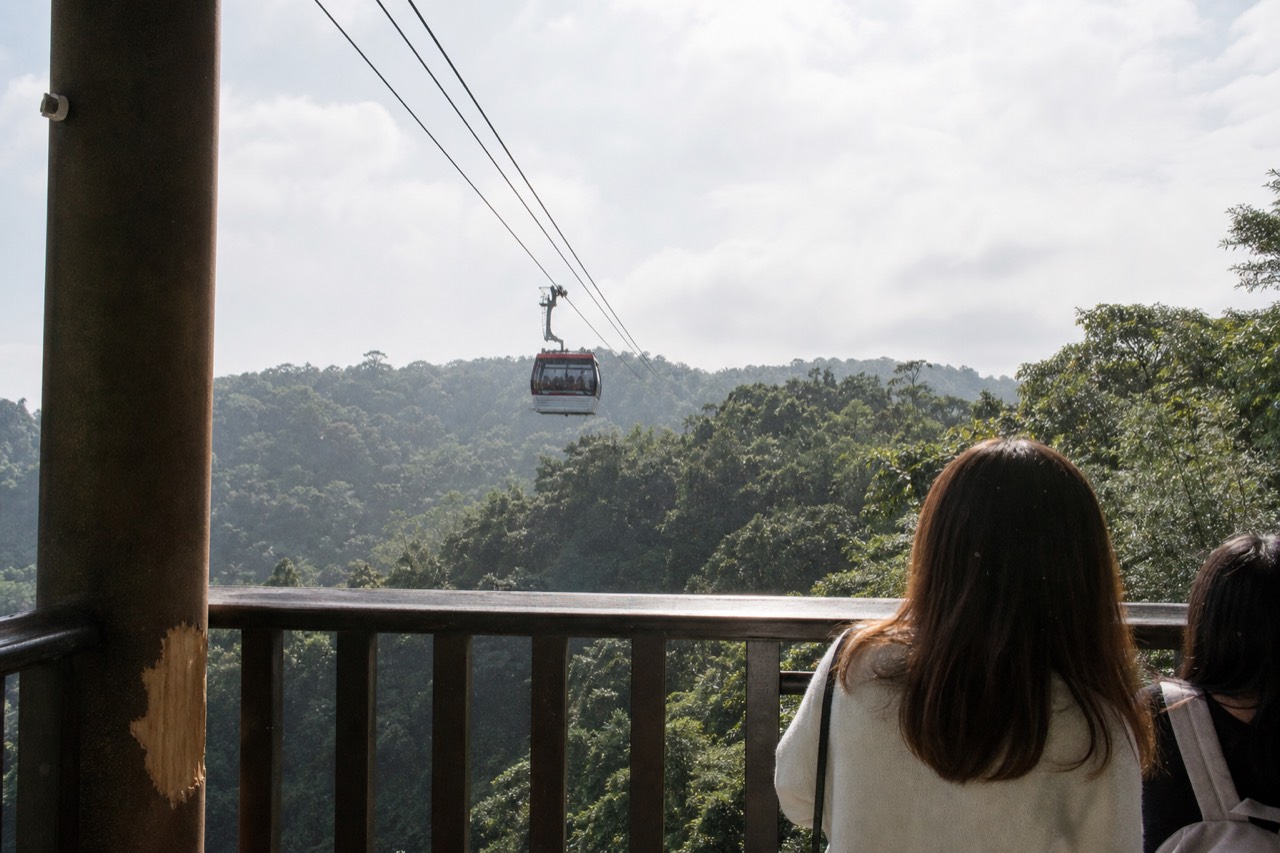
The full ride from Taipei Zoo Station to Maokong Station takes between 17 and 37 minutes, and both numbers are correct. The line is 4.033 km long with a design maximum speed of 6 m/s, but it actually runs at 3 to 5 m/s, and the operator slows it further in wind, in crowds and while passengers with reduced mobility board. TRTC's own 2026 press release rounds the trip to 20 to 30 minutes, which sits inside the true range.
That spread surprises people. A cable car feels like it should have one duration, the way a train does. But a detachable gondola is a continuously circulating loop with no timetable, and the operator dials the rope speed up or down depending on the day. On a calm weekday morning you can be at the top in under twenty minutes. On a gusty weekend afternoon the same cabin, on the same cable, takes nearly twice as long.
The practical planning version is this: budget 30 minutes for the ride itself, then add queue time on top, which on weekend afternoons can exceed the ride. Anyone fitting the gondola between two other Taipei commitments should read the queue section below before locking in a schedule.
How Long Does It Take To Ride The Maokong Cable Car?
Counting only the cabin time, the answer is 17 to 37 minutes for the full 4.033 km from Taipei Zoo Station to Maokong Station, with 20 to 30 minutes the figure the operator itself uses in its 2026 press release. The lower bound comes from TRTC's own technical specification sheet, which gives about 17 minutes one way at the system's faster running speed. The upper bound is the same journey at the slow speed the operator uses in wind and heavy loading.
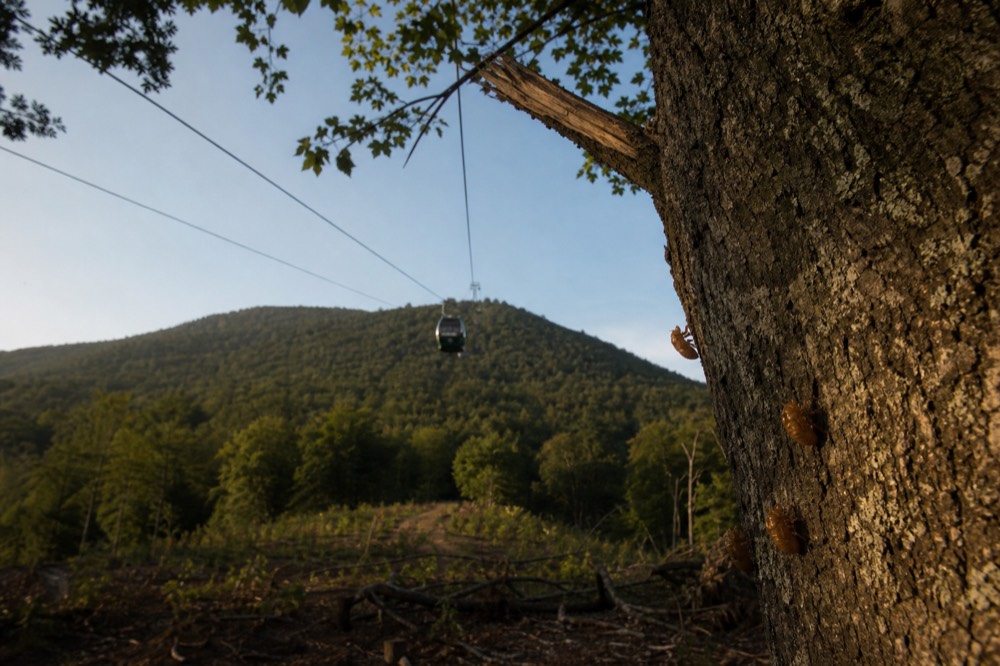
The engineering is the reason the number moves. This is a monocable automatic-circulating gondola, built by POMA of France, and TRTC describes the motion with a memorable analogy: like the conveyor belt in a Sushi Express shop. Cabins have no motor of their own. A grip clamps each one to a continuously moving haul rope, and the grip releases inside each station so the cabin slows to walking pace for boarding. The rope never stops for the ordinary flow of passengers; it only slows.
Three things push the operator toward the slow end of the range. Wind is the big one: the system suspends entirely when gusts reach 16 m/s and hold for more than three seconds, but well below that threshold the operator will already be running gently. Passenger loading is another, because the system can be slowed or stopped to let a wheelchair user board safely, which the accessibility pages promise. And sheer volume matters, since the cabins circulate continuously and a busy platform means the grip cycle runs more cautiously.
The 17-minute figure, the 20-to-30 rounding and the 37-minute worst case are all the operator's own numbers, not estimates from travel blogs, which is why this site treats them as the canonical set. Anyone who wants to dig further into the full ticket options for the day can start with the Maokong Gondola one-day pass, the product that covers unlimited rides across all four passenger stations.
Why Does One Ride Have A Twenty-Minute Spread?
The spread exists because the system's operating speed is not fixed: the haul rope runs at 3 to 5 m/s in normal service against a design maximum of 6 m/s, and TRTC slows it further for wind, crowding and accessible boarding. A journey at 5 m/s takes about 17 minutes; the same journey at 2 m/s, the slow speed used in some conditions, takes about 37. Every minute of ride time you have ever read about this line is downstream of that dial.
It helps to picture what the speed actually controls. The haul rope is a single continuous loop threading through all six stations, and every cabin on the line moves at whatever speed the rope moves. When the operator drops from 5 m/s to 3 m/s, every cabin on the mountain slows together, which is why the effect is uniform rather than cabin by cabin. The design maximum of 6 m/s, about 21.6 km/h, exists in the specifications but is not used in ordinary passenger service; actual operating speed sits at 3 to 5 m/s, or 10.8 to 18 km/h.
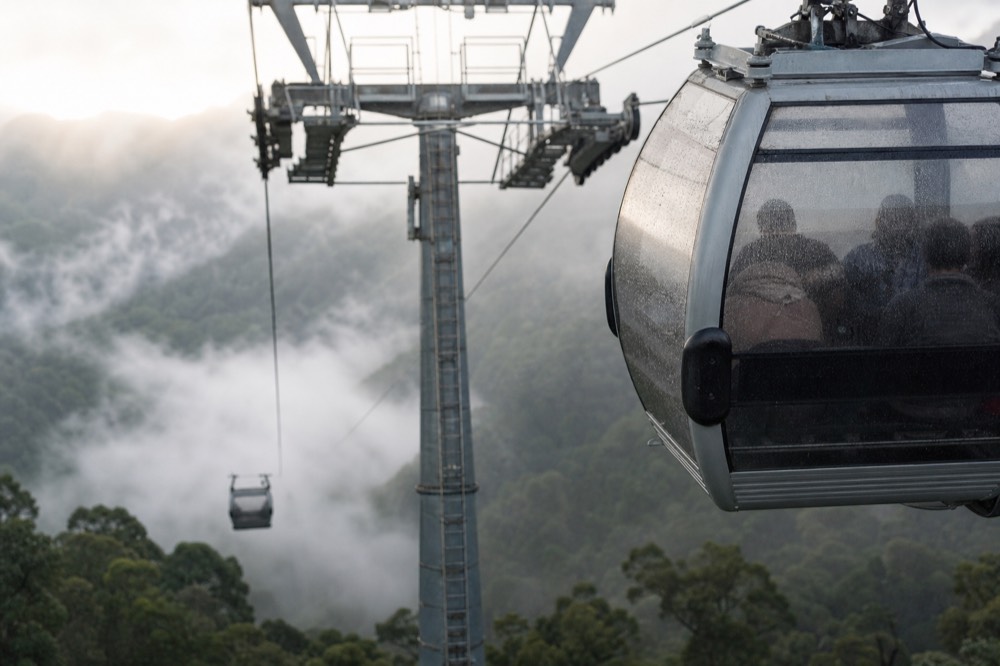
The slowest conditions are worth naming so you can predict your own ride time. A gusty afternoon after rain, a holiday platform three people deep, a boarding passenger who needs the cabin held: each of these shaves the rope speed, and the minutes accumulate over 4 km. Conversely, a quiet Tuesday morning at opening time is when the system runs at its quickest, and riders on the first departures routinely report the short end of the range.
One more nuance: because there is no timetable and no departure time, you cannot plan around a specific journey. You queue, you board the next cabin, and the ride takes what the rope speed of that hour allows. That is the whole reason this article gives a range rather than a single number, and it is the honest answer to give anyone who asks.
How Long Is Each Leg Between The Four Stations?
The route runs Taipei Zoo Station to Taipei Zoo South Station to Zhinan Temple Station to Maokong Station, 4.033 km in total, and the four passenger legs are uneven: the longest stretch carries the cabins over the deep valley between Zoo South and Zhinan Temple. The cabins also pass through two closed angle stations, Angle Station 1 and Angle Station 2, without stopping, and the direction change most riders feel happens there, not at Zhinan Temple.
The station order matters for planning because a one-day pass lets you hop off at any of the four. The physical sequence is Taipei Zoo, Angle Station 1, Taipei Zoo South, Angle Station 2, Zhinan Temple, Maokong. The operator describes the route as roughly shaped like the numeral 7, and the bends happen at the two angle stations, which exist for power control and route bending and are closed to the public. The drive system itself sits on an elevated platform above the platform level of Angle Station 2, which is why the sharpest turn feels like the cabins are swinging around a hidden corner: they are.
| Stop | Station | What it is for | Can you get off? |
|---|---|---|---|
| 1 | Taipei Zoo Station | Lower terminus, next to the zoo, rotary platform | Yes |
| 1.5 | Angle Station 1 | Route bending and power control | No, closed |
| 2 | Taipei Zoo South Station | Serves the zoo's inner grounds, lateral platform | Yes |
| 2.5 | Angle Station 2 | Route bending, drive system above the platform | No, closed |
| 3 | Zhinan Temple Station | Serves the temple and trailhead, lateral platform | Yes |
| 4 | Maokong Station | Upper terminus, tea houses and trails, rotary platform | Yes |
The operator does not publish per-leg times, so the table gives the station sequence with what each station is for; the 17-to-37-minute ride time applies to the whole 4.033 km regardless of where you board. The two platform types also affect how boarding feels: Taipei Zoo and Maokong have rotary turntable platforms, while Zoo South and Zhinan Temple have lateral side platforms, which is a detail that only matters if you are watching for it.
One rule catches riders out: you must get off at a terminal station, Taipei Zoo or Maokong, unless you hold a one-day pass. A single-journey ticket does not let you ride straight back down. One-day-pass holders who exit at Taipei Zoo Station must hand the ticket to staff and get it stamped for re-entry, a small step that adds a minute but keeps the pass valid.
How Long Is The Queue Nobody Counts?
The queue is the part that can cost more time than the ride: only 31 of the 147 cabins are Crystal Cabins holding 5 passengers instead of 8, so a crystal cabin passes roughly every 2 to 4 minutes, and visitor reports describe weekend-afternoon crystal waits exceeding 30 minutes. Regular-cabin queues are much shorter, because the other 116 cabins circulate far more frequently.
The arithmetic is worth spelling out, because it is the honest explanation rather than an opinion. The fleet is 147 cabins including 3 spares, of which 31 have the reinforced glass floor. Each crystal cabin carries a maximum of 5 passengers against 8 in a regular cabin, the lower limit existing because the glass floor alone weighs over 200 kg. Roughly one cabin in five is crystal, carrying 62 percent of the seats. That is why the crystal queue is structurally long on a busy day, no matter how efficiently the staff load it.
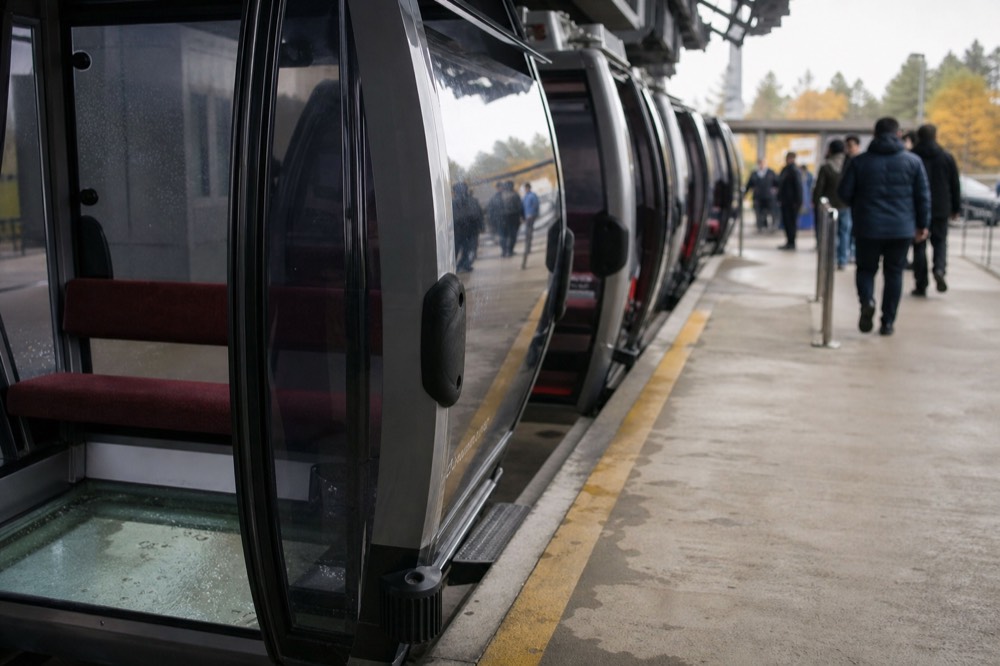
The operator publishes no real-time queue or wait-time indicator, no app, no widget, and it is worth saying plainly that one does not exist. What it does offer is the online booking system, live since December 2011, expressly to save time queuing, and specifically recommended for Crystal Cabins so you enter at an appointed time slot rather than standing in line. That is the actual mechanism for beating the queue, and it is the reason a prebooked ticket is not just a convenience on this line but a time-saver with a measurable payoff.
The Maokong Gondola one-day pass, the same product that covers unlimited rides across all four passenger stations, is worth a look before you travel: the operator's listing rates it 4.7 from about 11,700 reviews, from about $9.49, with more than 400,000 bookings and instant confirmation.
How Long Does The Whole Outing Take From Central Taipei?
Door to door, plan on roughly 40 minutes on the Wenhu Line from Taipei Main Station to Taipei Zoo Station plus a 350 metre walk each way, then the 20 to 30 minute ride, so a bare round trip without time at the top runs about two and a half hours. Most visitors, in practice, spend two to four hours up at Maokong itself, and the smart move is to treat the ride as the start of the outing rather than the whole of it.
The transit leg is simple. The Brown Line terminates at Taipei Zoo Station, the adult single fare from Taipei Main Station is NT$35, and the journey takes about 40 minutes with one transfer. From the MRT station the walk to the gondola's Taipei Zoo Station is about 350 metres southwest along Xinguang Road Section 2, four to six minutes at an ordinary pace. Add queue time at the gondola station, which is where weekend plans usually slip.
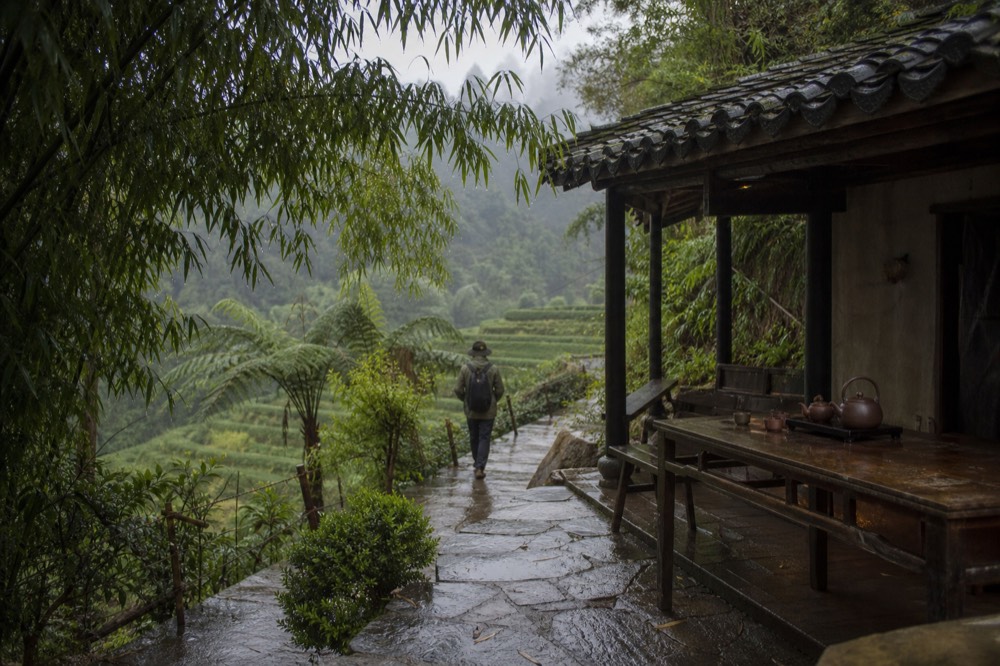
What people actually do at the top explains the spread in outing length. The tea houses are the main draw, and a leisurely tea sitting can run an hour or two on its own. The Camphor Tree Trail, Taipei's first fully level trail, is about 1.5 km and roughly 30 minutes one way, gentle enough that the operator says older visitors and small children can walk the whole thing. The Circular Tea Trail reaches the Tea Promotion Center in about 15 minutes on foot from Maokong Station, and the center is open daily 09:00 to 17:00 except Mondays. A couple who ride up, drink tea, walk one trail and ride down will comfortably fill half a day.
Two timing traps deserve a flag. The gondola closes at 21:00 on weekdays and 22:00 on weekends and holidays, and the operator publishes no separate last-boarding time, so arriving well before closing is the only safe rule. And the Maokong Tour Bus, free to gondola passengers on the same day, has only three departures after 19:00: at 19:00, 19:30 and 20:00, which catches out visitors who linger over sunset tea and then discover the shuttle has finished for the evening.
For anyone weighing the ride against the alternatives, the is the ride worth it question is the natural companion to this one, and the stations and route map guide carries the full station-by-station detail. The one-day pass also pairs with the free same-day transfer to the Maokong Tour Bus, which is how the operator stitches the zoo, the gondola and the tea area into a single Greater Three-Cat Park, and it is the ticket type that makes hop-on, hop-off timing possible at all.
The short answers: 17 to 37 minutes of cabin time, a queue that can match it on busy afternoons, and roughly two and a half hours for a bare round trip from central Taipei before anything you do at the top. The details below cover the spread, the legs, the crystal queue arithmetic and the ticket rules that decide whether you can ride straight back down.
Common Questions About The Maokong Cable Car Ride Length
How Long Does It Take To Ride The Maokong Gondola?
Between 17 and 37 minutes for the full 4.03 km from Taipei Zoo Station to Maokong Station. The system runs at 3 to 5 m/s against a design maximum of 6 m/s, so the speed on your visit decides where in that range you land. The operator's own 2026 press release rounds it to 20 to 30 minutes.
Why Does The Ride Time Vary So Much?
The haul rope speed is adjustable. TRTC slows it in wind, on busy days, and while passengers with reduced mobility board. At 5 m/s the trip takes about 17 minutes; at 2 m/s it takes about 37. There is no timetable because cabins circulate continuously, like the conveyor belt in a sushi shop.
Do The Cabins Stop At The Angle Stations?
No. Angle Station 1 and Angle Station 2 are closed to the public and exist for power control and route bending. The cabins pass through without stopping. The direction change happens between Zoo South and Zhinan Temple, not at Zhinan Temple itself.
How Long Is The Crystal Cabin Queue?
Only 31 of 147 cabins are crystal, each holding 5 passengers instead of 8, so one passes roughly every 2 to 4 minutes. Visitor reports describe weekend-afternoon waits exceeding 30 minutes. The operator's online booking system, which lets you reserve a time slot, is the intended fix.
How Long Should I Budget For The Whole Trip?
About 40 minutes on the Brown Line from Taipei Main Station plus a 350 metre walk, then the ride and the queue. A bare round trip runs roughly two and a half hours, but most visitors spend two to four hours at the top over tea, trails and the Sky Green observation deck.
Can I Ride Back Down On The Same Ticket?
Only with a one-day pass. A single-journey ticket requires you to get off at a terminal station, and to ride back you need a new ticket. One-day-pass holders exiting at Taipei Zoo Station must hand the ticket to staff for a stamp before re-entry.